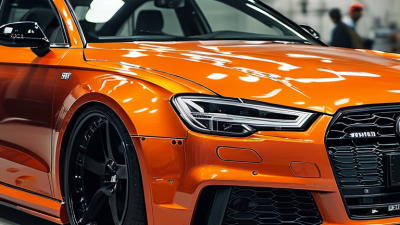
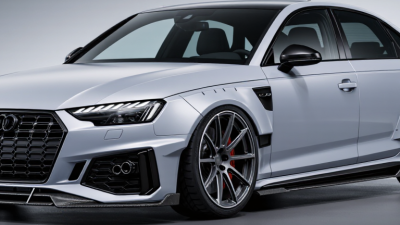
Choosing an Audi Bodykit is not just a styling decision. The right setup should suit the model, driving needs, and installation conditions. A low front splitter can sharpen the nose, while side skirts visually lower the car. A rear diffuser or spoiler changes the profile, but fitment and clearance matter more than dramatic photos.
Audi tuner Hans-Jürgen Abt offers a useful industry reference for precision-led customization. A concise principle for this guide is: “Fitment before flair.” This is an editorial summary, not a verified direct quotation. Buyers should check exact model year, trim, mounting points, and material before comparing designs. A kit listed for an A4 may not fit every A4 variant. Small differences matter.
This overview compares common Audi Bodykit types for global buyers, including subtle OEM-inspired packages and more assertive widebody styles. It considers appearance, material, fitment, installation, and practical ownership details. Look closely at bumper edges, wheel clearance, and the finish around each panel. These details can be easy to miss. Product listings may also leave gaps about hardware or installation requirements, so verify them with the seller or a qualified installer. No kit is perfect for every driver. A restrained design may suit daily use, while a broader look can demand more careful planning. The aim is a confident choice, not a rushed one.
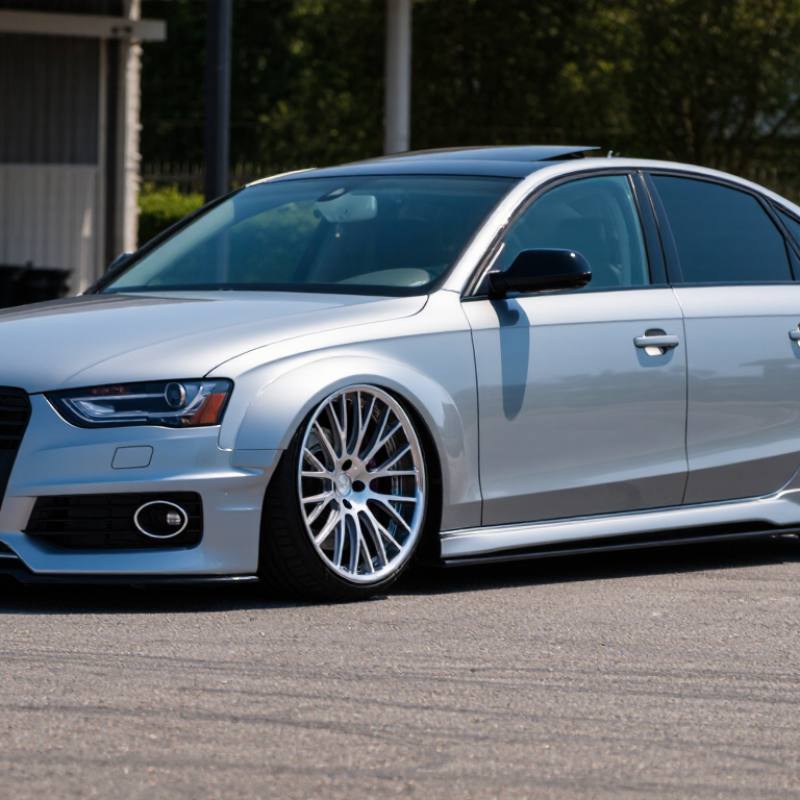
A vehicle body kit usually combines a front lip or bumper cover, side skirts, and rear valance or diffuser. Some sets add a spoiler or wider fender extensions. Not every kit includes every part. The front lip can influence airflow beneath the nose, while side skirts help manage air along the lower body. A diffuser guides airflow leaving the rear underside. Their effect depends on shape, ride height, and speed.
Fit matters as much as appearance. Before installation, check mounting points, wheel clearance, ground clearance, and access to parking sensors or cooling openings. Poorly aligned edges can catch road debris; a low front lip may scrape steep driveways. A spoiler is not automatically functional. Without suitable design or test data, its effect on stability is uncertain. Small gaps matter.
Industry figures offer context, not proof of body-kit demand. SEMA’s 2023 U.S. market report recorded $52.3 billion in specialty-equipment retail sales, a broad category covering many products beyond body kits. Grand View Research estimated the global automotive aftermarket at $449.2 billion in 2023. These markets are not directly comparable, and neither figure isolates body-kit sales. That distinction is easy to miss. A careful buyer should compare part-level specifications, material, mounting method, and vehicle-specific fitment before choosing a complete set.
Three common formats define the main body-kit choices for 2026. Front lips, side skirts, and rear diffusers form an add-on aero package. They change the car’s profile without replacing every bumper. Full kits usually include redesigned front and rear bumpers, skirts, and sometimes a spoiler. Widebody kits add wider fenders, creating room for broader wheels and a more pronounced stance. Subtle, but useful. Material and mounting quality matter as much as appearance; flexible plastic can tolerate small impacts, while fiberglass may need more careful fitting.
Choose parts around the vehicle’s exact year, trim, and existing sensors. Measure twice.
The Specialty Equipment Market Association’s 2024 U.S. market report estimated specialty-equipment sales at $52.3 billion in 2023.
This broad market figure is not a body-kit sales estimate, but it shows the scale of demand for vehicle personalization. A kit’s advertised fit may still leave uneven panel gaps, so request installation details and clear photos of finished examples. Also check that added parts do not obstruct cooling, lights, or parking sensors. Catalog images rarely show every compromise.
Bodykit materials affect weight, flexibility, finish, and installation effort. ABS plastic usually offers consistent molding and suits daily use. Polyurethane flexes more easily around minor bumps, though its surface may need careful preparation. Fiberglass can support sharp, custom shapes, but it may crack under impact. Carbon fiber is light and distinctive, yet quality and repair costs vary. Material labels alone do not guarantee durability.
Design details matter just as much. A front lip changes the lower profile, while side skirts visually connect the wheels and body. Diffusers add rear styling, but their shape should not obstruct sensors or exhaust outlets. Fitment depends on exact model year, trim, bumper design, and factory mounting points. Similar-looking vehicles may use different parts. A careful installer should test-fit panels before paint, check panel gaps, and confirm clearance over ramps. I have seen small gaps become expensive corrections. It is an easy detail to overlook.
Tips: Ask for year-and-trim compatibility, mounting hardware, and clear photos of the underside. Check package dimensions before shipping. Do not assume a part fits just because the body style looks identical.
| Bodykit Type | Common Materials | Typical Design Features | Common Fitment Areas | Fitment Differences to Check | Practical Considerations |
|---|---|---|---|---|---|
| Front Lip or Splitter | Polypropylene (PP), ABS plastic, polyurethane (PU), or fiberglass-reinforced plastic (FRP) | Lower front profile; may include side extensions or a multi-piece design | Lower edge of the front bumper | Bumper shape, model generation, standard versus sport bumper, grille layout, and sensor or camera openings | Check ground clearance and approach angle. A splitter can be vulnerable to steep ramps and curbs. |
| Side Skirts | PP, ABS plastic, PU, or FRP | Extended lower sill profile, sometimes with fins or contrasting trim | Along the lower body between the front and rear wheel arches | Wheelbase, door and sill profile, body style, and existing side-sill trim | Confirm that mounting points do not obstruct drainage openings or required access to jacking points. |
| Rear Diffuser or Lower Valance | PP, ABS plastic, PU, FRP, or carbon-fiber composite | Finned or sculpted lower section; openings may be shaped around exhaust outlets | Lower rear bumper area | Rear bumper variant, exhaust outlet position and number, tow-hook access, and parking-sensor placement | Some designs are trim-specific. Check heat clearance around exhaust components and compatibility with the existing bumper. |
| Rear Spoiler or Roof Spoiler | ABS plastic, PU, FRP, or carbon-fiber composite | Low-profile lip, raised wing, or extension mounted at the rear edge or roofline | Trunk lid, hatch, or upper rear window area | Sedan, hatchback, wagon, and SUV tailgate shapes; mounting location; camera, washer, and brake-light clearance | Adhesive-mounted parts require clean, compatible surfaces and correct installation conditions. Larger spoilers may need mechanical fasteners. |
| Fender Flares or Widebody Extensions | PP, ABS plastic, PU, or FRP | Added wheel-arch coverage; may have smooth, rivet-look, or bolt-on styling | Front and rear wheel arches | Arch contour, wheel offset, tire width, suspension height, and local rules for wheel coverage | Measure the wheel and tire setup before ordering. Some designs require drilling, trimming, or paintwork. |
| Full Exterior Kit | Usually a combination of PP, ABS plastic, PU, or FRP; some pieces may use carbon-fiber composite | Coordinated front, side, and rear components, with optional spoiler or arch extensions | Multiple exterior panels and bumper areas | Exact model generation, body style, bumper package, parking aids, lighting, exhaust layout, and included component list | Confirm whether the kit replaces original parts or attaches over them. Allow for test fitting, preparation, and paint matching. |
| Material Comparison | PP is commonly used for flexible molded parts; ABS offers a rigid molded finish; PU is flexible; FRP is rigid and can be shaped; carbon-fiber composite is lightweight but typically more costly | Appearance and surface finish vary by manufacturing process and coating | Material choice can differ between components in the same kit | Check whether the part is supplied primed, painted, textured, or with a finished surface | Material alone does not guarantee fit or durability. Manufacturing quality, mounting design, and installation all matter. |
| Global Fitment Checks | Applies to all materials | Fitment should be confirmed against the vehicle, not just its model name | All exterior attachment points and adjacent components | Model year and generation, sedan or wagon or hatchback or SUV body, bumper version, sensor configuration, and regional equipment differences | Right-hand-drive versus left-hand-drive usually does not determine exterior panel fitment, but market-specific bumpers and equipment can differ. Verify using the vehicle identification details and clear product fitment information. |
Fitment note: Bodykit compatibility varies by vehicle generation, body style, trim, and factory equipment. Confirm the exact part application and mounting requirements before purchase; professional test fitting is recommended before painting.
Body kits should be chosen by model year, body style, and generation, not vehicle class alone. Compact sedans, larger four-door models, and SUVs differ in bumper width, wheelbase, grille openings, and sensor locations. A front lip that fits one generation may leave a gap on the next. Small details matter. Check mounting points, headlamp clearance, and parking-sensor cutouts before ordering. Side skirts also need to match the door length; a few millimeters can make an otherwise clean profile look uneven.
SEMA’s 2023 Market Report valued the U.S. specialty-equipment market at $52.3 billion in 2022. That figure covers a broad aftermarket, not body kits for specific models or generations, so it should not be treated as a fitment forecast. For global buyers, confirm left- or right-hand-drive details and compare the kit with the exact factory bumper configuration. Material matters, too: ABS plastic can offer flexible everyday use, while fiberglass may need more careful preparation. Even detailed catalogs can miss production changes. A dry fit before paint is worth the extra time.
Material density is one factor in choosing exterior components; exact fitment depends on the vehicle model and generation.
Polypropylene and ABS are common choices for molded components, while fiber-reinforced composites are generally denser. Values are approximate typical material densities; formulations vary. Always verify that a body kit is designed for the specific model and generation.
Global buyers should compare a body kit by function, fitment, material, and local approval needs—not appearance alone. A front lip can sharpen the nose but may reduce clearance on steep ramps. Side skirts need even alignment beneath both doors. A rear diffuser should leave exhaust outlets and sensors unobstructed. Small gaps matter. Widebody panels require careful checks around wheel travel, door edges, and tire coverage.
Regulations differ by destination and vehicle category. UNECE Regulation No. 26 covers external projections for specified vehicle classes, while local requirements may also address vehicle width, lighting, and inspection. A kit that fits in a product photo may still interfere with parking sensors or increase scraping risk. Check the exact vehicle year and trim, request installation instructions, and confirm approval requirements with local authorities or a qualified inspection professional. No approval is automatic.
Industry figures offer context, not proof of kit quality. SEMA’s 2023 Market Report valued the broader U.S. specialty-equipment market at about $52.3 billion in 2022; this includes many products beyond body kits. Grand View Research estimated the global automotive aftermarket at $468.91 billion in 2023, also covering far more than exterior styling. Ask sellers for material details, measured fitment photos, and written warranty terms. Dry-fit before paint. Allow extra workshop time for alignment, sensor checks, and adjustment; even good instructions can leave room for interpretation.