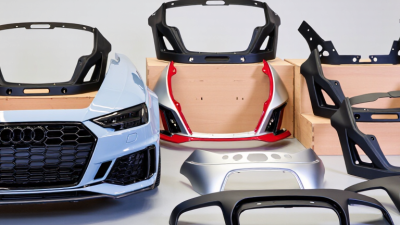
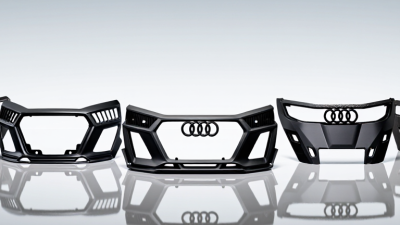
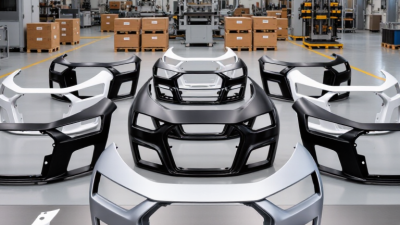
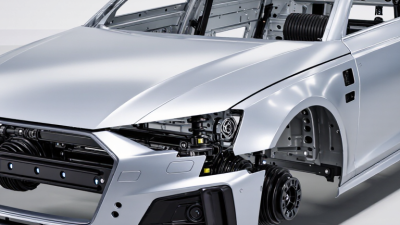
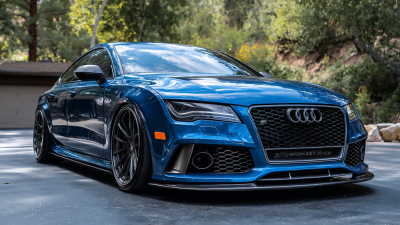
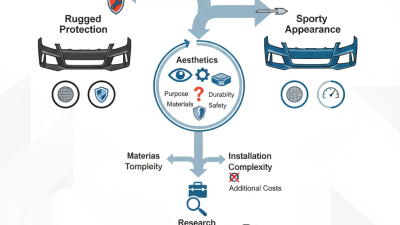
China’s automotive aftermarket has become an important sourcing destination for Audi front bumper components. This guide examines ten China-based suppliers serving global buyers, with attention to product range, manufacturing capability, quality control, and export experience. The focus is practical: identifying suppliers that can provide an accurate Front Bumper Audi, consistent surface quality, and dependable communication.
Automotive sourcing specialist Michael H. Lee observes, “A bumper is not merely a cover; it is a measured interface between design, safety, and repair.” This principle matters when comparing Audi bumper suppliers. Buyers should inspect injection-molding capacity, PP and ABS material specifications, mounting-point accuracy, grille compatibility, sensor openings, and parking-assist provisions. Factory photographs help, but physical samples reveal more. Check the edge alignment, paint adhesion, weld marks, and packaging protection. Small defects become expensive after ocean freight.
The strongest suppliers usually provide OE-style replacements, model-year identification, technical drawings, and inspection records. Some also support primered, painted, or customized versions. However, a polished website does not prove reliable production. That remains a common sourcing mistake. Buyers should request samples, confirm tolerances, review company history, and clarify warranty procedures before placing a large order. Certifications may support credibility, but they should be verified against the actual factory and product scope. This introduction sets a realistic framework for evaluating China’s top Front Bumper Audi suppliers, while recognizing that price alone rarely predicts long-term value.

China’s Audi front bumper supplier landscape covers three distinct channels: OEM, OES, and aftermarket production. OEM suppliers build to vehicle-program specifications, while OES manufacturers usually offer equivalent dimensions, materials, and testing. Aftermarket factories focus on replacement demand, flexible tooling, and competitive pricing.
INDUSTRY SCALE The scale is substantial. OICA recorded 93.55 million motor vehicles produced worldwide in 2023. China’s automotive association reported 31.28 million vehicles produced domestically in 2024. However, major industry reports rarely separate front-bumper output. Buyers should therefore verify factory-level evidence instead of relying on market size alone. A serious supplier should provide PPAP records, dimensional reports, material declarations, and evidence of IATF 16949-based quality control. Inspect the grille openings, parking-sensor mounts, radar brackets, and paint surface under direct light. Small errors become expensive during assembly.
Tips: Request one painted sample and one unpainted sample. Compare clip positions, wall thickness, surface texture, and packaging protection. Ask whether tooling is owned, shared, or newly developed. This matters more than a polished catalog. In my experience, suppliers may describe OES capability too broadly; the claim needs supporting inspection records. Some buyers also overlook export packaging. A bumper arriving with crushed corners is not a low-cost solution. Supplier scoring should include mold control, traceability, lead time, warranty handling, and realistic production capacity. Temperature and humidity testing are useful, but they do not replace a physical fit check.
Selecting among China’s top ten front bumper suppliers requires more than comparing catalog photos. IATF 16949 shows structured automotive quality control, while ISO 9001 supports broader process consistency. Buyers should verify certificate scope, validity, and factory location directly. A certificate alone cannot prove reliable production.
ECE R42 approval ECE R42 approval is highly relevant for bumper performance in specified low-speed impacts. Ask for current test reports, approval documents, and matching product numbers. MOQ can change sharply with material, tooling, color, and packaging requirements. Confirm whether the quoted MOQ covers one model, one finish, or a full production batch.
Lead times should include tooling, sampling, testing, and shipment preparation. A supplier promising seven days may exclude important stages.
Tips: Request one physical sample before placing a large order. Compare mounting points, surface finish, weld quality, and packaging strength. Ask for an IATF audit summary and recent nonconformance records. These details reveal more than polished presentations. Also, calculate buffer stock for seasonal shipping delays. Even strong suppliers can miss a target. That is worth admitting. A practical scorecard can assign separate points for certification, ECE evidence, MOQ flexibility, defect response, and realistic lead times. Keep every promise in writing.
China’s top ten front bumper suppliers should be compared through practical supplier profiles, not polished claims. Each profile should identify supported model years, body styles, sensor openings, and regional fitment requirements. Compact sedans, executive sedans, and midsize SUVs often need different mounting points. A careful buyer should request dimensional drawings and trial samples.
Materials reveal production discipline. Common options include polypropylene blends, impact modifiers, recycled content, and primer-ready surfaces. Profiles should explain material grades, pigment control, and low-temperature impact testing. Tooling details matter too. Ask about steel selection, mold lifespan, cooling layout, and repair records. A supplier with ten molding machines may still lack suitable clamping force. Capacity should include monthly output, inspection staffing, and backup production lines. Numbers without evidence are weak.
Tips: Request one sample from each shortlisted supplier. Check gap consistency, grille alignment, parking-sensor fit, and surface waviness under angled light. Compare stated capacity with recent inspection records and shipment schedules. Also review packaging tests, because corner damage can appear after long-distance transport. No supplier profile should look perfect. Small tooling delays or paint adjustments may occur, and honest reporting is more valuable than vague confidence. Ask how defects are contained, recorded, and corrected before production expands.
China’s leading front bumper suppliers should pass an evidence-based audit, not only a catalog review.
During factory visits, I check PPAP files against AIAG requirements, including design records, process flow, PFMEA, control plans, material certificates, and dimensional results. A supplier should also provide fitment testing on an actual vehicle body. Check gap, flushness, mounting force, sensor openings, and paint adhesion. One attractive sample proves very little.
Quality rates need clear definitions. Ask for monthly PPM, first-pass yield, customer complaints, rework records, and corrective-action closure time. Compare at least twelve months of data. World Bank’s 2023 Logistics Performance Index gave China a 3.7 score, but logistics strength does not guarantee molding accuracy. UN Comtrade data can verify HS-code export activity and destination markets. It cannot confirm product quality. That distinction is often missed.
Tips:
Request three recent PPAP examples. Match inspection dates with production orders. Verify export records through customs documents, bills of lading, and packing lists. Check whether the exporter, factory, and bank beneficiary are consistent.
Ask for salt-spray, impact, low-temperature, and vibration reports when the bumper uses clips, grilles, or parking-sensor mounts.
Some suppliers report zero defects because they exclude rework. That is a warning sign.
I have also seen excellent factories lose control after tooling changes. Require a change-notification procedure, sample approval, and a repeat fitment test before shipment.
A practical comparison of China’s top ten front bumper suppliers should begin with landed cost, not unit price. Export quotes often range from USD 28 to USD 95, depending on material, tooling, finish, and order volume. Request the same specification from every supplier. Otherwise, the comparison becomes misleading.
Incoterms can change the real budget. FCA usually gives buyers more control over freight, while FOB simplifies port delivery. CIF may appear convenient, but destination charges can remain unclear. DDP requires careful customs verification and written responsibility for local taxes. Ask for carton dimensions, gross weight, and loading plans. A 40-foot container may hold 180 to 320 bumpers, depending on packaging design. Smaller trial orders may use 20-foot containers or consolidated shipping.
Warranty terms deserve equal attention. Reliable suppliers commonly offer 12 to 24 months for manufacturing defects, excluding collision damage and incorrect installation. Ask whether replacement parts, labor, or return freight are covered. Keep signed inspection records and photographs from loading day. This is practical evidence when claims arise. Some suppliers respond quickly before payment, then slow down later. That risk is real. A factory audit, production sample, and video inspection reduce uncertainty, but they cannot remove it. The ranking is therefore not absolute; cost, shipping volume, and warranty performance should be scored together.