page-head - 1

2026 Top Audi Bumper Types What Global Buyers Need to Know

The 2026 Audi Bumper market is becoming more specialized, not simply larger. Global buyers now compare bumper design, material, sensor compatibility, and delivery reliability. A basic front bumper may suit an A4, while an S line or RS model needs different contours, grilles, mounts, and finish details. Small differences can create expensive delays.

Collision-repair educator Mike Anderson offers a useful buying principle: “A bumper is not just a cover; it is part of the vehicle’s repair system.” This view matters when selecting an Audi Bumper for modern vehicles. Many Audi models include parking sensors, radar zones, camera washers, or active air guides. A replacement can look correct and still fail during installation. That is the uncomfortable part. Appearance alone proves very little.

This guide examines major Audi Bumper types for 2026, including OEM, certified aftermarket, used, standard, S line, RS, front, and rear versions. It also considers ABS and polypropylene construction, paint preparation, mounting accuracy, and packaging protection. Buyers in Europe, North America, Asia, and the Middle East may face different stock levels and shipping conditions. Therefore, the VIN, model year, body style, trim, and sensor layout should be checked before payment. Photographs help, but they can mislead. Even experienced buyers sometimes miss a hidden bracket difference. Reliable suppliers provide clear part numbers, installation records, and return terms. They should not promise perfect fitment without vehicle verification.
2026 Top Audi Bumper Types What Global Buyers Need to Know

Audi Bumper Types: Structure, Materials, and Core Functions

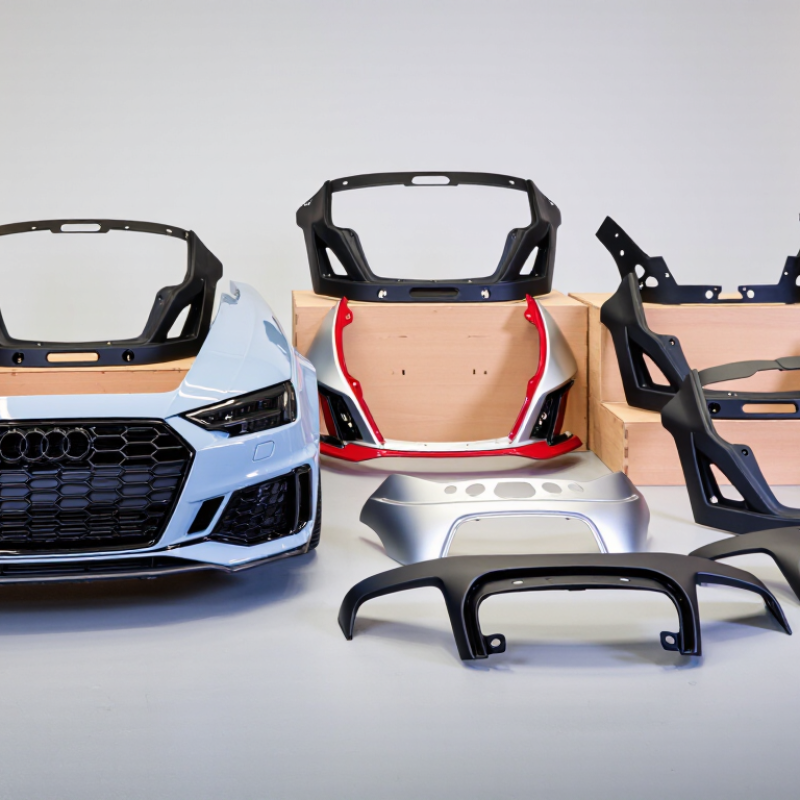
Modern passenger-car bumpers are layered systems, not single molded shells. A visible thermoplastic cover sits over an energy absorber and a reinforced beam. Mounting brackets transfer impact loads into the front or rear body structure. The cover manages styling and airflow. It is not the primary crash barrier. Many buyers still confuse these roles.

Common beam materials include high-strength steel, aluminum, and engineered composites. The U.S. Department of Energy’s Vehicle Technologies Office reports that a 10% vehicle-weight reduction can improve fuel economy by roughly 6–8%. That figure supports lightweight design, but it does not justify replacing every steel beam. Repair access, corrosion resistance, joining methods, and pedestrian protection still matter. Aluminum can reduce mass, yet it may require specialized repair or replacement decisions. A specification sheet rarely captures that complexity.

Bumper functions extend beyond low-speed damage control. They must manage energy, protect lamps and cooling hardware, support sensors, and reduce pedestrian injury risks. NHTSA’s FMVSS No. 581 defines U.S. low-speed bumper requirements, while UNECE Regulation No. 42 addresses protective devices internationally. Buyers should compare beam thickness, absorber density, mounting points, material grade, and sensor compatibility. I would also inspect cold-weather behavior. Brittle covers can crack before the beam visibly deforms. That detail is easy to overlook.

2026 Top Audi Bumper Types: Structure, Materials, and Core Functions

Typical material density by bumper component

Modern vehicle bumper systems combine a lightweight outer cover, a low-density energy absorber, and a structural reinforcement beam. Polypropylene is commonly used for flexible covers, expanded polypropylene absorbs impact energy, steel or aluminum provides crash-load management, and glass-fiber-reinforced polyamide is used for strong mounting components. The values shown are representative material densities in g/cm³.

How to Identify the Right Audi Bumper for Each Vehicle Model

Choosing the correct Audi bumper starts with the exact vehicle model, production year, and body style. A bumper for an A4 sedan may not fit an A4 Avant, even when the front shape looks similar. Confirm the VIN, model code, facelift version, and original part number before ordering. Small differences matter. Headlamp washers, parking sensor holes, grille mounts, and camera openings must match the vehicle’s equipment.

Inspect the damaged bumper carefully. Check whether it is front or rear, standard or sport design, and fitted with radar or ultrasonic sensors. Measure the mounting points, wheel-arch edges, and lower grille area. A reliable supplier should provide clear photos, dimensions, material details, and compatibility information. Plastic markings on the inner surface can also help identify the correct specification. Do not rely on appearance alone.

Real workshop checks often reveal overlooked details. A bumper may fit the body but leave a sensor slightly misaligned. That can affect warning systems and create expensive rework. I have found model-year differences hidden in clips and reinforcement brackets. The assumption that “same model means same bumper” is not always safe. When uncertain, compare the old part beside the replacement and request technical confirmation before installation. Even paint shade and surface texture deserve attention. Discovery often comes after the wrong order, unfortunately.

Front, Rear, and Performance Audi Bumper Design Differences

Front bumper design usually prioritizes airflow, protection, and sensor placement. A deeper lower grille can improve cooling, but it may reduce clearance on steep ramps. In workshop fitment checks, I measure mounting points before judging appearance. This catches mismatched brackets and uneven panel gaps. Fitment matters.

Rear bumpers serve different demands. They protect the vehicle during low-speed impacts and guide airflow around the tail. Parking sensors need accurate openings and stable mounting surfaces. A diffuser-style lower section may reduce turbulence, but it can also collect road dirt. Buyers should inspect drainage paths, reflector positions, and exhaust cutouts before ordering.

Performance bumpers often use sharper channels, lighter materials, and larger ventilation areas. These details can support brake cooling and reduce lift at speed. However, aggressive styling does not always create measurable aerodynamic gains. I have seen impressive designs with weak underbody alignment. That was a useful reminder. Material choice also affects repair costs, especially between reinforced polymer and composite panels. Global buyers should compare climate exposure, road conditions, shipping protection, and local installation skills. A bumper that suits a smooth circuit may scrape constantly on uneven urban roads. Measure twice. Ask for clear drawings, verified dimensions, and close-up photos of every mounting area.

Global Buyer Guide to Audi Bumper Fitment, Quality, and Standards

Global Buyer Guide to Audi Bumper Fitment, Quality, and Standards

Choosing the right bumper starts with exact vehicle identification. Confirm the model year, body style, engine layout, and parking sensor positions. A bumper can look identical yet use different brackets or wiring openings. Small gaps matter. Check the VIN-compatible part reference when available, then compare mounting points with clear product drawings.

Bumper types usually include original-equipment style, certified aftermarket, sport design, and heavy-duty versions. Each serves a different purpose. Original-equipment style parts often provide the closest fit. Certified aftermarket parts may offer better value, but quality varies between suppliers. Inspect plastic thickness, surface uniformity, reinforcement areas, and grille alignment. I have seen attractive panels fail because their clips flexed during installation. Do not guess.

Global buyers should ask for material specifications, dimensional checks, and applicable impact-test records. Regional rules may cover pedestrian protection, lighting openings, reflectors, and sensor placement. Confirm whether the bumper supports radar, cameras, washers, and parking sensors before ordering. Test it dry. Install the panel without adhesive first, checking wheel-arch lines and hood clearance. Photos help, but they cannot replace a physical trial fit. Some suppliers provide excellent documents but weak packaging; corner damage may appear only after delivery. Review carton protection, inspection procedures, return terms, and replacement support before payment.

Key Factors for Choosing and Purchasing Audi Replacement Bumpers

Choosing a replacement bumper begins with exact vehicle compatibility, not appearance. Check the production year, body style, trim level, and parking sensor layout. A bumper may look identical in photos but use different mounting points or grille openings.

Material also matters. Thermoplastic bumpers are usually flexible and practical for daily driving. Reinforced options may offer better impact resistance, but they can cost more and require careful fitting. Ask for clear product photos, measured dimensions, mounting-hole details, and included components. Confirm whether sensor brackets, tow-hook covers, reflectors, and hardware are supplied. Small missing parts can delay installation.

Finish quality deserves close attention. A pre-painted panel should match the vehicle’s color code, while a primed panel needs professional preparation before painting. Inspect corners, edges, and inner supports for warping or stress marks. Packaging is important too; thin protection can leave dents before delivery. A low price can look attractive. It can also hide extra labor, repainting, or return costs. I would not trust a listing that only says “fits many models.” That wording is often too vague. Compare seller specifications with the vehicle identification details, and request written confirmation when uncertain. An experienced installer should check panel gaps, sensor clearance, and bumper alignment before final tightening. Some buyers focus on appearance first, but safe fitment should come earlier.

2026 Top Audi Bumper Types: What Global Buyers Need to Know — Key Factors for Choosing and Purchasing Audi Replacement Bumpers
Bumper Type Primary Application Typical Construction Key Features Typical Weight Range Relative Replacement Cost Buyer Considerations
Standard Front Bumper Cover Daily driving and standard vehicle repairs after low-speed front-end damage. Injection-molded thermoplastic, commonly polypropylene-based, with integrated mounting points. Lightweight design, factory-style contours, grille and lamp openings, and compatibility with standard trim. Approximately 4–8 kg for the cover only. Low to Medium Confirm production year, body style, parking-sensor openings, headlamp-washer provisions, and grille compatibility before ordering.
Standard Rear Bumper Cover Replacement of scratched, cracked, or deformed rear exterior panels. Paintable thermoplastic cover supported by absorbers, brackets, and reinforcement components. Usually designed for reverse sensors, reflectors, exhaust cut-outs, and rear trim pieces. Approximately 5–10 kg for the cover only. Low to Medium Check exhaust layout, parking-sensor quantity, towing equipment provisions, rear diffuser shape, and regional safety specifications.
Sport-Styled Front Bumper Vehicles equipped with a more aggressive exterior package or buyers seeking a sportier appearance. Thermoplastic cover with deeper air openings, additional grilles, and sport-specific trim interfaces. Lower air intakes, sharper styling lines, optional splitter sections, and different fog-lamp or sensor locations. Approximately 5–9 kg for the cover only. Medium Appearance alone does not guarantee direct fitment. Verify fender alignment, undertray connection, grille design, and sensor calibration requirements.
S-Line-Style or Performance-Style Bumper Performance-oriented trims that use unique front or rear fascia designs. Paintable polymer cover combined with model-specific grilles, ducts, trims, and mounting hardware. Distinctive lower sections, larger air openings, decorative inserts, and possible aerodynamic extensions. Approximately 6–11 kg for the cover only. Medium to High Do not mix standard and performance-style parts without checking all associated brackets, grilles, ducts, and lower shields.
Bumper with Parking-Sensor Openings Vehicles fitted with ultrasonic parking assistance. Thermoplastic cover with molded or pre-marked sensor apertures and mounting retainers. Supports sensor holders, decorative caps, wiring access, and correct sensor orientation. Approximately 5–10 kg for the cover only. Medium Sensor hole diameter, depth, holder angle, and surface curvature must match. Incorrect positioning may cause false warnings or missed obstacles.
Bumper with Camera or Radar Provisions Vehicles using front cameras, radar modules, surround-view systems, or advanced driver-assistance functions. Reinforced polymer cover with dedicated sensor windows, brackets, grilles, or transparent radar-compatible sections. Designed around camera visibility, radar transmission areas, sensor brackets, and calibration access. Approximately 6–12 kg for the cover only. High Check sensor transparency, bracket position, grille material, and post-installation calibration. A visually similar cover may not support safe system operation.
Unpainted Replacement Bumper Cost-conscious repair projects where painting will be completed locally. Raw or primer-ready thermoplastic surface intended for sanding, adhesion treatment, primer, and paint. Lower initial purchase price and flexibility for local color matching. Usually comparable to the finished equivalent, approximately 4–12 kg. Low to Medium Budget separately for preparation and painting. Confirm whether the surface is raw, primed, or ready for direct refinishing.
Pre-Painted Replacement Bumper Faster installation when the required exterior color and finish are available. Thermoplastic cover finished with primer, basecoat, and clearcoat or equivalent coating system. Reduced workshop time and improved color consistency when the paint code is correctly matched. Usually comparable to the unpainted version, approximately 4–12 kg. Medium to High Color codes can vary by production period and market. Inspect for transport damage and allow for minor variation caused by existing paint aging.
OEM-Equivalent Aftermarket Bumper Repair applications requiring a replacement shape and mounting pattern comparable to the original part. Automotive-grade polymer produced using aftermarket tooling and specified material grades. Often offers broad availability and competitive pricing while retaining standard attachment points. Approximately 4–12 kg, depending on size and integrated features. Low to Medium Review fitment data, material certification, mounting-hole accuracy, surface quality, and return terms rather than relying only on product photographs.
Reinforced or Impact-Repair Bumper Assembly Repairs involving damage to the cover, absorber, reinforcement beam, brackets, or energy-management components. Multi-piece assembly that may include a polymer cover, foam absorber, steel or aluminum reinforcement, and mounting brackets. Restores structural energy absorption and correct attachment of exterior panels. Approximately 12–30 kg for a complete assembly, depending on components included. High Determine whether the quotation covers the cover only or the complete assembly. Structural parts should be inspected for deformation and replaced when required.
Electric-Vehicle Aerodynamic Bumper Electric vehicles that use smooth surfaces, airflow management, and specialized sensor integration. Lightweight thermoplastic cover with aero inserts, closed or reduced openings, and sensor-specific components. Low-drag contours, battery-cooling considerations, concealed sensor areas, and distinctive underbody interfaces. Approximately 5–12 kg for the cover only. Medium to High Confirm battery-cooling airflow paths, lower shield connections, camera or radar locations, and compatibility with the vehicle’s electronic systems.
Complete Bumper Assembly Projects requiring a ready-to-install group of compatible exterior and energy-management components. Cover, absorber, reinforcement, brackets, grilles, trim, sensor holders, and selected hardware. Reduces the risk of missing small parts and can shorten workshop sourcing time. Approximately 15–35 kg, depending on front or rear configuration. High Request an itemized parts list, verify shipping dimensions, check sensor and trim inclusion, and confirm whether painting and calibration are excluded.