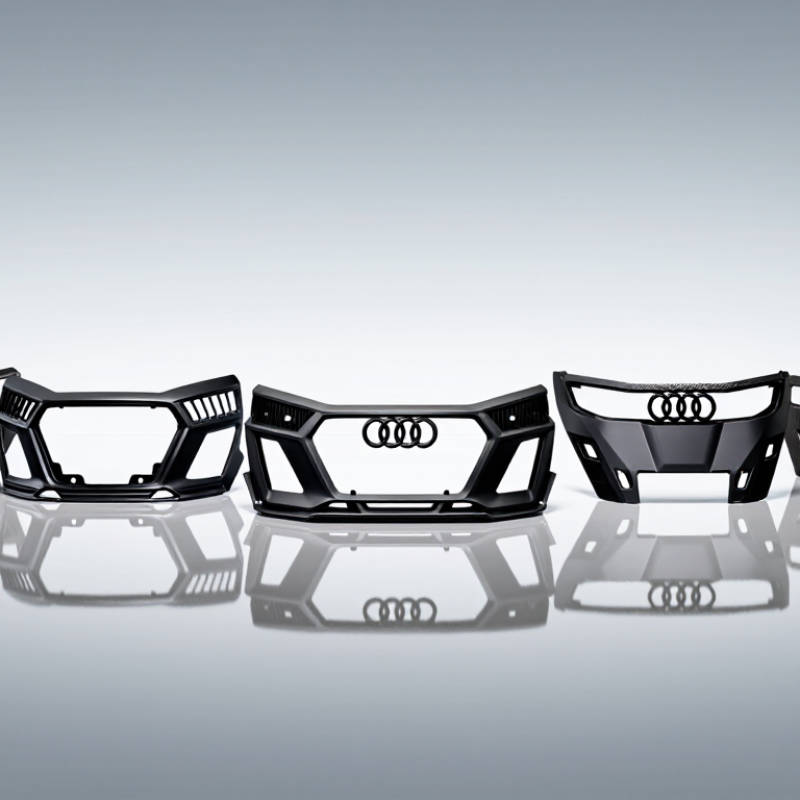
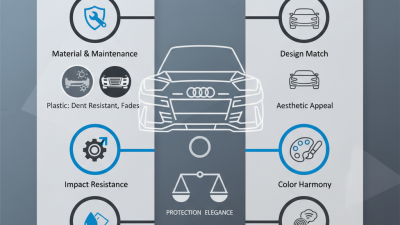
Choosing the right Audi Bumper in 2026 requires more than comparing prices and glossy product photos. Global buyers must consider model year, body style, mounting points, material, finish, and local driving conditions. A bumper designed for an Audi A4 may not fit an A4 Avant or S line version. Small differences matter.
This guide examines popular Audi bumper types, including OEM replacements, certified aftermarket designs, sport-style bumpers, off-road-inspired options, and lightweight composite models. Each type offers different benefits. Original equipment bumpers usually provide dependable fitment and consistent sensor alignment. Aftermarket versions may offer broader styling choices and lower costs. However, quality can vary between suppliers. Check carefully.
Real-world installation experience shows that parking sensors, cameras, grilles, fog-light openings, and reinforcement beams must be matched before purchase. A clean-looking bumper is not enough. It should also support safe installation and proper vehicle function. Buyers should confirm the VIN, production date, trim level, and shipping dimensions with a qualified seller or technician. Regional requirements may also affect reflectors, lighting spaces, and roadworthiness checks.
No ranking is perfect.
The best choice depends on use, budget, climate, and repair needs. Buyers in urban markets may prefer flexible thermoplastic designs for minor impacts. Drivers in colder regions may value durable materials and reliable surface coatings. This overview offers practical guidance, but product specifications should always be verified before ordering. Mistakes happen, especially with imported parts. Careful checking remains the safer decision.
A bumper is more than a painted outer shell. It is the vehicle’s first visible impact layer. Most modern systems combine a thermoplastic cover, an energy-absorbing foam or crush box, and a reinforced beam. Mounting brackets connect these parts to the body structure. Some designs also carry parking sensors, radar modules, lighting, and pedestrian-protection components.
Bumper performance depends on impact direction and speed. The Insurance Institute for Highway Safety evaluates low-speed bumper damage and repair costs through controlled impact testing. Its findings show that similar vehicles can produce very different repair bills after minor crashes. That matters to international buyers, especially where labor and replacement-part prices vary widely. A reinforced steel or aluminum beam offers strength, but it may transfer more force into nearby structures. A flexible polymer cover can reduce cosmetic damage, yet it cannot replace proper crash engineering.
Pedestrian risk deserves attention. The U.S. National Highway Traffic Safety Administration reported 7,522 pedestrian deaths in 2022. The front bumper’s height, stiffness, and lower-leg contact area can influence injury outcomes. European New Car Assessment Programme protocols also examine pedestrian protection around the front-end structure. A bumper should not be judged by appearance alone. Check beam material, absorber design, sensor compatibility, and mounting quality. I still question one common assumption: heavier construction is not automatically safer. Poor alignment can weaken performance. A small gap may reveal a larger problem.
Front bumper selection should match the vehicle’s body style, road conditions, and repair expectations. Compact sedans often use lightweight polymer bumpers with narrow air openings. These reduce weight and support smooth airflow. Midsize SUVs need stronger lower sections for gravel, steep driveways, and frequent city contact. Sportback models usually require shaped bumpers with wider side vents and sharper lines. Electric crossovers may use sealed designs because cooling needs differ from combustion vehicles.
From my inspection experience, bumper fitment depends on more than appearance. Check parking sensor openings, camera mounts, fog-light positions, grille channels, and undertray connections. A bumper can look correct but still create panel gaps near the headlights. Material quality also matters. Flexible plastic handles minor impacts better, while reinforced sections protect mounting points. Exact measurements and the original part code should be verified before ordering globally.
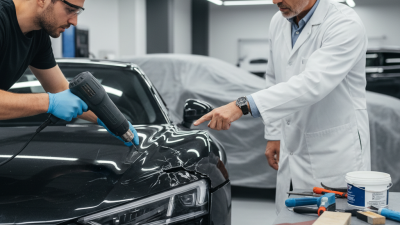
Tips: Measure every mounting point. Confirm sensor compatibility. Ask for clear photos of the inner brackets. Review the finish under natural light. Do not assume a listed model year guarantees a perfect fit. I have seen small production changes cause expensive rework. That detail is easy to miss. A professional installer should test alignment, sensor clearance, and airflow before final fastening.
Front bumper types matched with common vehicle designs and driving needs
The chart uses a relative suitability index from 0 to 100. Higher values indicate a stronger match between each bumper design and the listed driving requirement. Polymer fascia, aerodynamic shaping, ground clearance, pedestrian-impact management, and sensor integration are common considerations when selecting a front bumper for different vehicle applications.
Rear bumper design now combines impact protection, sensing hardware, and visual proportion.
For global buyers, the best choice depends on road conditions, parking habits, and repair access.
A reinforced polymer cover can absorb low-speed contact without transferring force directly to the body structure. Beneath it, an energy-absorbing beam and controlled deformation zones help manage impact loads. The Insurance Institute for Highway Safety reports that rear automatic braking can prevent many backing crashes, with effectiveness near 78% in its testing. Sensors still need careful placement. Mud, snow, or a small trailer can create false warnings.
Parking sensors, wide-angle cameras, and short-range radar serve different purposes. A camera shows a child-sized object behind the vehicle, while radar estimates distance in poor light. NHTSA’s rear-visibility requirements also emphasize a defined viewing area behind passenger vehicles. Buyers should check whether the bumper supports factory sensor calibration after replacement. That detail is often missed. It can become expensive later.
Styling options include smooth surfaces, integrated reflectors, matte lower sections, and removable sensor bezels. A higher bumper edge may improve clearance on rough roads, but it can reduce visibility near the vehicle. S&P Global Mobility’s vehicle technology research shows that driver-assistance features continue expanding across vehicle segments, increasing demand for sensor-ready body parts. However, more sensors do not guarantee safer driving. Fit, calibration, and real-world visibility still matter. Personally, I would inspect the mounting points before choosing a sharper-looking design.
For global buyers, bumper material is a practical decision, not a visual preference. Polypropylene with EPDM offers flexibility, low weight, and reliable recovery after minor impacts. TPO performs well in cold regions and supports consistent surface finishing. ABS provides sharper styling, but it can become less forgiving under severe impact.
Small details matter. A quality bumper should show even wall thickness, clean mounting points, and accurate sensor openings. Check resin identification, UV resistance, and batch traceability before placing a large order. Manufacturers following ISO 9001 can provide stronger process control. Automotive suppliers may also use IATF 16949 systems for production consistency. These certificates help, but they do not replace physical inspection.
Ask for impact, weathering, coating adhesion, and dimensional test records. Request samples from different production batches. That step often reveals color variation or weak clips. Local temperature ranges, shipping conditions, and recycling rules should influence material selection. No material wins every test. Low-cost recycled content may reduce environmental impact, yet unstable formulation can create fit problems. This deserves a second look. Buyers should compare laboratory data with real installation feedback, especially after winter storage, sea transport, or repeated assembly. Reliable manufacturing is not only about passing one test; it is about repeating the same result across thousands of parts.
Selecting the right bumper type starts with vehicle identity, not appearance. Check the model year, body style, engine range, and facelift period. A front bumper may look correct but use different headlamp mounts. Rear bumpers can also vary by exhaust layout, parking sensors, and tow equipment.
Use the vehicle identification number and compare it with the supplier’s part reference. Request clear photos of the inner mounting points, sensor openings, grille supports, and lower air guides. Measure the bumper’s width and confirm the material, finish, and included hardware. Ask whether it is new, repaired, primed, or ready for painting. Small details matter.
Verify packaging before importing. A strong carton, corner protection, and moisture-resistant wrapping reduce damage during long transport. Confirm the commercial invoice, packing list, and destination requirements with a qualified customs professional. Keep every message and inspection photo. They can support a claim if the item arrives cracked or incomplete.
I once trusted a catalog image too quickly. It matched the color, not the mounting design. That mistake was expensive. A careful buyer should still question every listing, including this advice. Supplier knowledge helps, but independent measurements remain more reliable. Allow extra time for inspection, because a perfect-looking bumper may need clips, brackets, or sensor bezels before installation.
| Bumper Type | Typical Position | Main Function | Common Material | Sensor and Lighting Compatibility | Best Use Case | Key Fitment Verification | Import and Packaging Notes | Relative Damage Risk During Transport |
|---|---|---|---|---|---|---|---|---|
| Front Bumper Cover | Front exterior | Provides the visible outer skin and supports openings for grilles, lamps, parking sensors, and trim. | Usually injection-molded polypropylene or a polypropylene-based compound. | Parking sensor holes Camera opening Headlamp washer opening Radar-area design | Replacing a cracked, dented, or heavily scratched front outer panel. | Match the exact vehicle generation, body style, production period, sensor-hole count, grille layout, headlamp-washer provision, and mounting tabs. | Ship in a molded carton or reinforced crate with corner protection. Oversize dimensions may affect freight charges more than the part weight. | Medium |
| Rear Bumper Cover | Rear exterior | Protects the rear body area and provides mounting locations for reflectors, sensors, trim, and exhaust-related sections. | Usually polypropylene or a polypropylene blend. | Rear parking sensor holes Reflector provisions Tow-hitch cut-out Exhaust cut-out | Replacing rear impact damage or changing from a standard configuration to a configuration with different trim openings. | Verify body style, exhaust arrangement, tow-bar clearance, reflector position, sensor count, diffuser design, and wheel-arch shape. | Use a long carton with foam separators. Do not stack heavy parts on top of the cover because the edges and mounting tabs can deform. | Medium |
| Bumper Reinforcement Beam | Behind the front or rear cover | Distributes impact loads across the vehicle structure and works with crash-management components. | Commonly high-strength steel, aluminum, or another engineered metal depending on vehicle design. | Normally does not contain sensors, but it must not obstruct radar, wiring, or air-intake components. | Replacing a bent or crash-damaged structural bumper beam. | Check front versus rear position, left-hand-drive or right-hand-drive market requirements where relevant, mounting-hole pattern, beam curvature, energy-absorber interface, and corrosion condition. | Protect metal surfaces against moisture and abrasion. Metal parts are heavy, so calculate freight using both actual and dimensional weight. | Low to medium |
| Energy Absorber | Between the bumper cover and reinforcement beam | Absorbs and manages low-speed impact energy before it reaches the reinforcement beam and body structure. | Often expanded polypropylene foam or a comparable energy-absorbing polymer. | Usually passive; confirm clearance around sensor brackets and wiring channels. | Replacing a compressed, fractured, or water-damaged absorber after a collision. | Verify bumper position, shape, foam density or construction, beam interface, cover clearance, and attachment points. | Keep the part dry and prevent compression during storage. Do not use straps directly across fragile foam sections. | Medium |
| Bumper Lower Valance or Lip | Lower front or rear edge | Improves airflow management, ground clearance transition, appearance, and integration with underbody panels or diffusers. | Polypropylene, ABS, or another exterior-grade polymer. | Usually no sensors, but some versions may include openings for air ducts, cameras, or trim components. | Replacing a scraped lower section or restoring a vehicle after curb or road-debris damage. | Check ground-clearance profile, fastener locations, exhaust or air-duct openings, undertray connection, and whether the part is supplied separately or attached to the cover. | Package flat with a rigid backing board. Confirm whether the piece is a separate component before ordering a full bumper assembly. | High |
| Bumper Grille or Air Intake Insert | Front bumper opening | Controls airflow and fills the bumper opening while supporting trim, mesh, or active-air-management elements. | Usually molded ABS or polypropylene. | Air-intake opening Camera or radar clearance Active-air-flap interface | Replacing a broken, missing, or damaged grille insert without replacing the complete bumper cover. | Match opening shape, mounting clips, finish, center or side position, air-flow direction, and compatibility with the vehicle’s driver-assistance hardware. | Use individual sleeves or separators to prevent surface scuffing. Small parts can be lost inside large mixed consignments, so use labeled inner cartons. | Medium |
| Bumper Side Retainer or Guide | Near the left or right wheel arch | Aligns the bumper cover with the fender and holds the side edge in the correct position. | Plastic or reinforced polymer. | No direct sensor function, but incorrect alignment can affect sensor position and panel gaps. | Repairing a loose bumper corner when the outer cover is still usable. | Verify side, front or rear position, fastener arrangement, wheel-arch contour, and compatibility with the exact bumper cover. | Small and light; pack in a sealed labeled bag inside the main carton. Confirm quantity because left and right retainers are not interchangeable. | Low |
| Bumper Sensor Holder or Bracket | Inside the front or rear bumper cover | Positions ultrasonic parking sensors or other sensing hardware at the required angle and depth. | Plastic, reinforced polymer, or metal depending on the mounting location. | Ultrasonic sensor position Radar clearance Wiring retention | Restoring sensor mounting after a bumper replacement or collision repair. | Check sensor diameter, bracket angle, adhesive or clip method, left/right orientation, wiring route, and cover thickness at the sensor opening. | Protect against bending and static impact. Keep brackets with their related bumper assembly and label each position clearly. | Medium |
| Primed Replacement Bumper Cover | Front or rear exterior | Provides a paint-ready outer cover for local refinishing before installation. | Exterior-grade thermoplastic, supplied with a primer layer rather than final color coating. | May be supplied with or without sensor, camera, washer, grille, and trim openings. | Buyers who need a paintable replacement and want to match the vehicle color locally. | Confirm primer compatibility with the intended paint system, surface preparation requirements, tab condition, panel gaps, and all required openings. | Keep the primed surface clean and dry. Avoid direct contact with plastic film or oily packaging materials that can contaminate the primer. | Medium |
| Pre-Painted Bumper Cover | Front or rear exterior | Provides a finished exterior surface intended for installation with minimal refinishing. | Thermoplastic cover with a professionally applied paint or coating system. | Must have the correct holes, brackets, trim provisions, and calibration-related clearances. | Reducing local paint-shop time when the color code and finish are confirmed. | Verify paint code, gloss level, texture, production shade variation, protective-film condition, sensor openings, and fitment before removing packaging. | Use soft protective film, foam edge guards, and a rigid carton. Document any transit marks immediately for freight claims. | High |
| Complete Bumper Assembly | Front or rear exterior system | Combines multiple components such as the cover, grille, absorber, brackets, trim, and sometimes sensors or wiring. | Mixed materials including thermoplastic, foam, steel or aluminum, and electronic components where applicable. | May include parking sensors, camera mounts, radar provisions, wiring, reflectors, grilles, and washer components. | Reducing sourcing time when several bumper components are damaged or unavailable separately. | Request a componentized packing list and verify every included part, sensor count, connector type, vehicle configuration, and calibration requirement. | Higher volumetric freight cost and greater customs-document complexity. Use a reinforced crate or custom-fitted carton and insure the shipment where practical. | High |
| Recycled or Used Bumper Component | Front or rear, depending on the component | Provides a potentially lower-cost replacement while retaining an original used component’s design and mounting geometry. | Original mixed-material construction; condition varies by component and storage history. | Sensor holes, brackets, wiring, and trim may be missing, damaged, or previously repaired. | Budget-focused repairs where cosmetic refinishing or replacement hardware is acceptable. | Require clear photographs of all tabs, brackets, seams, repair areas, sensor openings, underside surfaces, and part-identification markings. | Clean and dry the component before export. Check destination rules for used automotive parts, contamination, waste classification, and import documentation. | High |