page-head - 1

Who Are the Best Front Bumper Manufacturers in China?

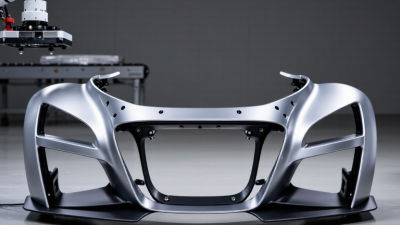
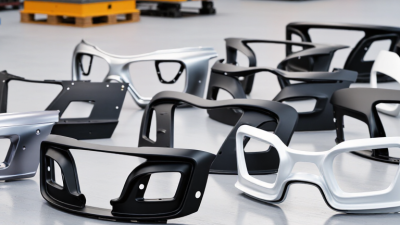
Choosing a Front Bumper manufacturer in China takes more than comparing prices or factory photos. Buyers need to assess fit, material consistency, tooling capability, finish, and communication. Small details matter: mounting tabs, sensor openings, and paint preparation can decide whether a bumper fits cleanly or needs rework.

The scale is substantial. OICA reported 93.5 million motor vehicles produced worldwide in 2023, a 10% increase from 2022. That figure describes vehicle production, not bumper demand, but it shows the scale of the supply chain manufacturers serve. Elon Musk, an automotive manufacturing executive, expressed a broader production lesson: “The machine that builds the machine is the most important machine.” For bumper sourcing, that points to process control as well as product design. Yet a famous quotation cannot verify a supplier’s capabilities.

This guide examines Chinese manufacturers through practical criteria: product range, customization, quality checks, export experience, and evidence of reliable delivery. Not a simple ranking. Public information can be incomplete, and a polished website is not proof of consistent production. Ask for current specifications, inspection records, and samples suited to your vehicle before making a decision. A supplier may look strong on paper and still miss a detail that matters on the assembly line.
Who Are the Best Front Bumper Manufacturers in China?

How China’s Front Bumper Manufacturing Industry Is Structured

China’s front bumper industry is organized around automaker procurement, tier-one integrators, and specialist component factories. CAAM reported 30.16 million vehicles produced in China in 2023, showing the scale of the domestic manufacturing base. That figure covers vehicles, not bumpers, so it should not be treated as a bumper-market estimate.

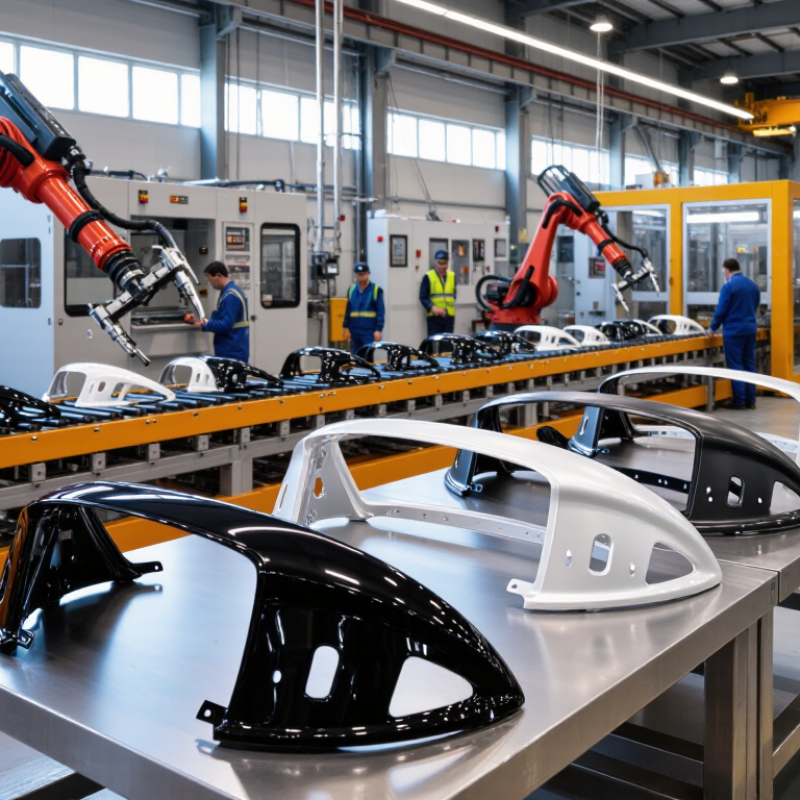
Automakers typically set fit, safety, appearance, and delivery requirements. Tier-one suppliers coordinate bumper systems, while specialist plants mold plastic fascias and produce brackets, energy absorbers, or related parts. Toolmakers and resin suppliers sit further upstream. A fascia may look simple on a showroom floor. Behind it are molds, surface finishing, dimensional checks, and repeated fit tests against vehicle body panels. Some suppliers serve original-equipment programs; others focus on replacement parts. The boundary is not always clear.

Public reports rarely separate front bumper revenue or supplier rankings from broader auto-parts categories. So claims about the “best” manufacturers need careful checking. OICA’s 2023 production data confirms China’s automotive scale, but it does not identify bumper capability. Buyers should examine tooling control, defect records, sample consistency, and delivery performance. A clean sample is useful, but not enough. Even factory audits can miss problems that appear only after high-volume production begins.

What Products and Technologies Do Leading Manufacturers Offer?

Leading front bumper manufacturers supply more than painted covers. Their product range commonly includes polypropylene or TPO fascia, foam energy absorbers, and steel or aluminum reinforcement beams. Some also produce sensor brackets, grille shutters, and pedestrian-impact components. Small details matter. A poorly placed bracket can affect sensor alignment after a minor collision.

OICA reported about 93.5 million motor vehicles produced worldwide in 2023. The IEA’s Global EV Outlook 2024 reported nearly 14 million electric-car sales that year, around 18% of global car sales. These shifts increase demand for bumper systems that accommodate varied vehicle layouts. Manufacturers may use CAD modeling, tooling trials, and impact testing to check fit, airflow, and energy absorption. Radar-transparent zones and carefully positioned ultrasonic mounts are increasingly relevant. Yet added integration is not automatically better. A crowded fascia can make inspection and replacement slower.

Ask suppliers for material specifications, dimensional inspection records, and test conditions—not just a list of features. Request sample assemblies with sensors installed, then verify clearances around lamps, grilles, and cooling ducts. Repairability deserves attention, too. A lightweight beam may reduce mass, but its performance depends on the full bumper assembly and vehicle structure. One trade-off can be missed. Manufacturers’ published claims should be checked against project-specific validation data.

How to Assess Front Bumper Manufacturers in China

When assessing front bumper manufacturers in China, look beyond catalog photos and quoted prices. Ask how each supplier confirms vehicle fitment, including model year, trim, sensor openings, and mounting points. Request drawings, material specifications, and records from impact or durability testing. Ask for evidence. A sample bumper can reveal uneven edges, thin spots, rough welds, or holes that do not align with the vehicle. Check whether the supplier documents revisions and can trace production batches. These details help distinguish repeatable manufacturing from a convincing sales presentation.

Factory capability should be checked against the part you actually need. Ask about tooling ownership, daily inspection steps, defect handling, and packaging for long-distance transport. If possible, review a production sample and compare it with approved drawings before placing a larger order. Clear answers matter. So does the way a supplier responds when a measurement is wrong. A polished report can still miss a practical issue, and a factory visit cannot guarantee every shipment will match. Keep written acceptance criteria, record sample findings, and agree on how changes will be approved. No single checklist is perfect; the goal is to reduce surprises with evidence you can verify.

Who Are the Best Front Bumper Manufacturers in China? - How to Assess Front Bumper Manufacturers in China

Use this evidence-based assessment framework to compare potential suppliers. The weighting is a suggested evaluation model, not a ranking of individual manufacturers.

Assessment Dimension Suggested Weight Evidence to Request How to Assess It
Quality management system 15% Current certificate, certification scope, covered manufacturing site, and recent audit findings or corrective-action records. Verify certificate validity and scope with the issuing certification body. IATF 16949 is an automotive quality-management-system standard; certification alone does not prove that a specific bumper meets your requirements.
Product validation and compliance 18% Test plans and reports for the specified bumper, vehicle application, and destination market; records for any customer-required impact or environmental tests. Check that test samples, configurations, and acceptance criteria match your program. Requirements vary by vehicle, customer, and market; for example, U.S. FMVSS No. 581 and UN Regulation No. 42 have distinct scopes and applicability.
Dimensional control and fit 15% Inspection reports against the approved drawing, measurement method, fixture details, and records from production parts. Compare measured results with the tolerances on the released drawing. Review critical mounting points, gaps, flushness, and interfaces using the intended vehicle or checking fixture.
Manufacturing capability 15% Process flow, equipment list, mold and tooling information, process-control plans, and evidence of capacity for the required part and production volume. Audit the relevant production line. Confirm that molding, finishing, and assembly processes match the part design, and check capacity using demonstrated cycle times, available shifts, and peak-demand plans.
Material and finish consistency 10% Material specifications, supplier or batch records, color and finish standards, and applicable test or inspection results. Confirm that the material and finish match the approved specification. Polypropylene-based compounds, including PP/EPDM-TD grades, are examples used for bumper fascias; the correct grade must be set by the vehicle or customer specification.
Engineering and change control 10% Drawing and revision controls, design-for-manufacture feedback, tooling-change records, and documented approval procedures. Check how the supplier identifies, reviews, and obtains approval for changes to materials, tooling, processes, or sub-suppliers before implementation.
Production quality performance 7% Recent defect, rejection, rework, and customer-complaint records, with definitions, reporting periods, and corrective actions. Review trends over time and compare figures only when their definitions and reporting periods match. Agree on acceptable targets with the buyer; there is no single universal defect-rate threshold for every program.
Traceability and corrective action 5% Sample traceability records linking parts to production dates, batches, material lots, and relevant process records; examples of corrective-action reports. Run a traceability exercise from a finished part back to its production and material records, and check whether the supplier can identify affected parts and document corrective actions.
Delivery and business continuity 5% On-time delivery records, lead-time assumptions, packaging standards, logistics plans, and contingency arrangements for supply interruptions. Compare actual delivery performance with the agreed schedule and verify that packaging protects painted or textured surfaces during handling and transport.
Total suggested weighting 100% Score each dimension against the same evidence requirements for every supplier being evaluated.

Note: This framework supports supplier evaluation; it does not certify, endorse, or rank any manufacturer. Confirm regulatory requirements for the specific vehicle, part, and destination market.

How Leading Manufacturers Differ by Expertise and Production Capacity

China’s front bumper manufacturers differ less by catalog size than by engineering depth, tooling control, and repeatable output. A supplier handling complex front-end parts may coordinate grille openings, lamp interfaces, sensor brackets, and energy-absorbing structures. That takes careful validation. Mold-flow analysis, dimensional checks, and vehicle-fit trials reveal more than a polished sample. Ask to review first-article measurements and batch records. Small details matter.

Production capacity also varies widely. The China Association of Automobile Manufacturers reported 30.161 million vehicles produced nationally in 2023. That figure describes the industry, not any individual factory. Compare verified monthly output, mold-change time, paint-line throughput, defect rates, and backup tooling. Check whether quoted capacity includes assembly and finishing. It often does not. A high-tonnage press alone cannot prove reliable delivery. Even supplier scorecards can mislead when they count theoretical shifts. The right manufacturer depends on whether a project needs rapid tooling changes, steady high-volume runs, or both. Use industry reports for context, then verify capability through factory audits and sample validation.

Who Are the Best Front Bumper Manufacturers in China? How Leading Manufacturers Differ by Expertise and Production Capacity

U.S. FMVSS No. 581 Low-Speed Impact Test Speeds

FMVSS No. 581 specifies low-speed bumper impact tests, including 2.5 mph barrier impacts and 1.5 mph corner impacts. These are regulatory test speeds, not manufacturer ratings. To compare suppliers’ expertise and production capacity, check their documented compliance testing, tooling capabilities, and verified output data.

How Buyers Can Verify Quality, Compliance, and Export Readiness

Choosing a China-based bumper supplier starts with evidence, not a polished catalogue. OICA reported 93.5 million motor vehicles produced worldwide in 2023, highlighting the range of platforms and production tolerances involved. Ask for revision-controlled drawings, dimensional inspection records, resin-grade certificates, and impact-test results tied to the exact part number. A certificate isn’t proof. Check its issuing body, site address, scope, and expiry date against the factory you assess. Request traceability from incoming resin batch to packed cartons. Inspect samples under consistent lighting for sink marks, uneven gaps, brittle tabs, and inconsistent mounting points. Check twice.

Export readiness is practical, too. UNCTAD’s Review of Maritime Transport 2024 reports that over 80% of world trade by volume moves by sea. Ask how long bumper covers are protected from bending, abrasion, and moisture during container loading. Confirm carton dimensions, stacking limits, packing lists, and production lead times in writing. Verify who handles export documents and pre-shipment inspection. A trial order may reveal weak packing or slow communication, but one smooth shipment does not prove consistent performance. That distinction is easy to miss.

Tips: Request a recent independent audit and a live video walkthrough of molding, inspection, and packing areas. Compare sample measurements with your drawing before approving tooling. Keep an approved sample for later checks. If basic records are missing, pause and ask why. It may be a simple oversight, but it still needs explaining.