The global body-kit market is becoming more diverse, technical, and difficult to compare. Buyers now choose between subtle lip kits, replacement bumpers, side skirts, widebody systems, and complete exterior conversions. Each type changes the vehicle’s appearance differently. More importantly, each demands different installation skills, material choices, and shipping arrangements.
SEMA’s 2024 market research valued the United States specialty-equipment sector at more than 50 billion dollars in 2023. This figure covers many products, not body kits alone. That limitation matters. Grand View Research also identifies steady growth across the broader automotive aftermarket, driven by personalization, vehicle longevity, and online purchasing. However, global body-kit data remains fragmented. Some reports combine cosmetic accessories with structural exterior components, making direct comparisons unreliable.
Colin Chapman’s famous engineering principle still offers useful guidance: “Simplify, then add lightness.” It applies to modern Car Bodikit selection. Lightweight fiberglass, polyurethane, ABS, and carbon-fiber-reinforced parts can produce very different results. A widebody kit may look dramatic under showroom lighting, yet poor panel alignment can appear immediately beside a parking-lot wall. Buyers should examine molding accuracy, mounting points, surface finish, certification expectations, and compatibility with sensors or cameras. Small details matter.
This guide compares the 2026 Car Bodikit types most relevant to global buyers. It considers design impact, material performance, installation complexity, maintenance, and realistic ownership costs. Some classifications overlap. That is unavoidable. The market itself is not perfectly standardized, and buyers should question impressive claims before ordering.

A car body kit is a set of exterior components that changes a vehicle’s shape, stance, or airflow. Common types include lip kits, full bumper kits, widebody kits, side skirts, fender extensions, and rear spoilers. Some buyers choose subtle lips for a cleaner appearance. Others prefer widebody panels for a stronger visual presence. The choice depends on purpose, budget, vehicle fitment, and local inspection requirements.
The market is substantial. SEMA’s 2023 Market Report valued United States vehicle accessorizing and modification spending at more than 50 billion dollars. This figure reflects strong interest in personalization, not body kits alone. Global buyers also choose kits to refresh older vehicles, repair damaged panels, or create a more distinctive profile. Practical details matter. A well-designed kit should align with factory mounting points, preserve sensor clearance, and withstand heat, rain, and road debris. Fitment matters.
Material selection changes the ownership experience. Fiberglass can reduce cost, but it may require careful preparation before painting. Polyurethane usually tolerates minor impacts better. Carbon-fiber parts can reduce weight, yet they often demand higher budgets and precise installation. Looks can deceive. A dramatic splitter does not automatically improve aerodynamics. Without wind-tunnel or computational testing, its benefit remains uncertain. Buyers should verify installation instructions, independent test information, replacement-part access, and compliance documents. Grand View Research’s 2024 automotive aftermarket analysis also identifies personalization as a continuing demand driver, but product quality varies widely across international suppliers.
Typical aftermarket retail price ranges in USD, parts only
Exterior lip kits and side skirts are popular entry-level upgrades because they usually require fewer parts and simpler installation. Full body kits and widebody kits cost more because they commonly include multiple panels, wider fenders, additional brackets, and more extensive fitting or paint work. Actual prices vary by vehicle compatibility, material, finish, shipping, and installation requirements.
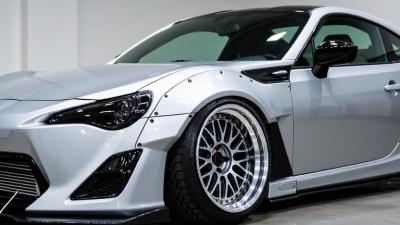
Car body kits now serve different visual and functional goals. The main types include lip kits, bumper kits, side-skirt kits, widebody kits, and complete kits. Lip kits add a low front splitter, rear extension, or subtle spoiler. They usually require less cutting and suit buyers seeking moderate styling changes. Bumper kits replace factory sections and create a stronger visual identity. Side-skirt kits fill the gap between the wheels and improve the car’s side profile.
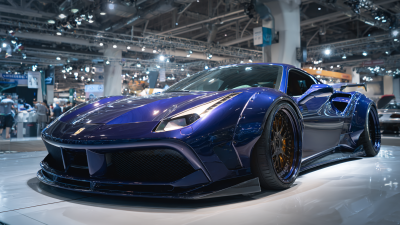
Widebody kits use extended fenders to create a broader stance. They may require wider wheels, revised alignment, and careful wheel-arch measurements. Complete kits often combine bumpers, skirts, fenders, and spoilers. They deliver a unified appearance, but installation errors become more visible. The categories are not perfectly consistent. Some suppliers use “aero kit” for almost any exterior package.
Grand View Research valued the global automotive aftermarket at about $427.8 billion in 2023 and projected continued growth through 2030. This figure covers many product groups, not body kits alone, but it reflects strong customization demand. S&P Global Mobility reported that the average U.S. vehicle age reached 12.6 years in 2024. Older vehicles may encourage cosmetic renewal, although buyers should inspect rust, panel gaps, and mounting points first. A glossy finish can hide poor fit. That remains an easy mistake. Material choice also matters: fiberglass is light and affordable, while reinforced plastics usually tolerate daily impacts better.
2026 Top Car Body Kit Types for Global Buyers?
Key Materials Used in Modern Car Body Kits
Modern car body kits rely on four material families: polyurethane, ABS plastic, fiberglass-reinforced polymer, and carbon-fiber-reinforced polymer. Each changes weight, impact behavior, surface finish, and repair cost. Polyurethane remains flexible around splitters and side skirts. ABS offers consistent molding and a clean, factory-like surface. FRP supports complex shapes at lower tooling costs, but it may crack under sharp impact. Carbon fiber reduces weight and adds stiffness, yet repair demands remain high. Fit still matters.
Industry reports show why composites attract vehicle developers. Grand View Research valued the global automotive composites market at approximately USD 9.2 billion in 2023. It forecasts a 6.6% compound annual growth rate from 2024 to 2030. MarketsandMarkets projected the automotive plastics market to grow from USD 35.4 billion in 2024 to USD 51.9 billion by 2029. These figures cover broader vehicle applications, not body kits alone. Applying them directly requires caution.
For global buyers, climate and installation quality deserve equal attention. Hot, humid regions need UV-stabilized polyurethane and well-coated FRP. Cold conditions can expose brittle plastics and weak fasteners. Buyers should request impact testing, resin details, curing methods, and repair guidance. Some suppliers provide limited evidence. That is a weakness. Mixed laminates also create recycling challenges. A lightweight panel is not automatically sustainable. Experienced installers should check wheel clearance, panel gaps, parking angles, and local safety requirements before final finishing.
| Body Kit Type | Primary Materials | Typical Components | Key Material Properties | Main Advantages | Common Limitations | Best Fit for Global Buyers |
|---|---|---|---|---|---|---|
| Polyurethane (PU) Body Kit | Molded polyurethane elastomer | Front and rear bumpers, side skirts, lip spoilers | Flexible, impact-resistant, and able to tolerate minor deformation | Good resistance to parking impacts; generally easier to repair than rigid composites | Usually heavier than fiberglass; molding and surface finishing can be more complex | Daily-driven vehicles, urban use, and regions with frequent low-speed contact |
| Fiberglass Reinforced Plastic (FRP) Kit | Glass fibers combined with polyester or epoxy resin | Wide-body fenders, bumpers, splitters, custom panels | Rigid, moldable, and suitable for complex shapes | Relatively low material cost; supports extensive custom designs and low-volume production | Can crack under sharp impact; typically requires more fitting, sanding, and finishing | Custom projects, show cars, motorsport builds, and price-sensitive applications |
| Carbon Fiber Kit | Carbon-fiber fabric with epoxy or other thermoset resin | Hoods, roofs, aerodynamic splitters, canards, mirror covers | High stiffness-to-weight ratio and distinctive woven surface | Lower weight potential than many conventional materials; strong and visually premium | Higher cost; damage inspection and professional repair may be required after impact | Performance-oriented vehicles and buyers prioritizing weight reduction |
| Carbon-Fiber Reinforced Polymer (CFRP) | Carbon fibers embedded in a polymer matrix | Structural aero parts, lightweight panels, rear diffusers | Very high stiffness with low mass when engineered correctly | Suitable for advanced lightweighting and performance applications | Manufacturing cost is high; recycling and repair processes are more complicated | Track-focused builds and premium lightweight vehicle programs |
| ABS Plastic Kit | Acrylonitrile butadiene styrene thermoplastic | Grilles, trim extensions, bumper covers, side skirts | Thermoplastic, impact-resistant, and suitable for repeatable molding | Consistent dimensions; practical for large-scale production and replacement parts | Can deform under excessive heat; surface preparation is important for paint adhesion | Replacement styling parts and buyers seeking balanced cost and fit consistency |
| Polypropylene (PP) Kit | Automotive-grade polypropylene, often impact-modified | Bumper covers, lower valances, wheel-arch extensions | Lightweight, flexible, and resistant to many common chemicals | Good impact behavior; commonly used for mass-produced exterior components | More difficult to bond and paint than some rigid plastics; heat can affect shape stability | High-volume replacement parts and everyday road vehicles |
| Polycarbonate Kit | Polycarbonate thermoplastic | Lightweight aerodynamic covers, transparent or semi-transparent panels | High impact resistance and good dimensional stability over a broad temperature range | Strong impact performance and lower weight than many glass alternatives | Can scratch and may require UV-resistant coatings to reduce long-term weathering | Specialized exterior parts and applications requiring impact-resistant transparent material |
| Sheet Molding Compound (SMC) | Glass fibers, thermoset resin, fillers, and additives | Large molded panels, hoods, trunk lids, and exterior covers | Rigid, dimensionally stable, and suitable for compression molding | Consistent production quality; good surface potential for larger panels | Heavier than carbon-fiber composites; repair and recycling can be challenging | Large-panel production where stiffness and repeatability are important |
| Natural-Fiber Composite Kit | Flax, hemp, or other plant fibers combined with polymer resin | Interior-adjacent trim, non-critical panels, decorative aero components | Lower-density reinforcement with a visible natural texture | Can reduce reliance on some mineral-based fibers and offer a distinctive appearance | Moisture protection, long-term durability, and supply consistency require careful engineering | Design-focused projects with sustainability targets and non-structural applications |
| Hybrid Composite Kit | Combination of carbon fiber, glass fiber, aramid fiber, or other reinforcements | Advanced splitters, fenders, spoilers, and reinforced lightweight panels | Material properties can be tailored by combining different reinforcement types | Balances stiffness, impact tolerance, weight, and cost more effectively than a single-fiber design | Quality depends strongly on fiber orientation, resin system, layup, and curing process | Performance builds requiring a compromise between premium weight reduction and durability |
| Aluminum Body Panel Kit | Automotive-grade aluminum sheet or formed aluminum alloy | Hoods, fenders, doors, engine covers, and custom panels | Low density, corrosion-resistant oxide layer, and good formability in suitable grades | Lower mass than many steel panels; recyclable through established metal-processing streams | More susceptible to dents in some applications; requires compatible joining and repair methods | Lightweight conversions, racing applications, and buyers emphasizing recyclability |
| Steel Body Panel Kit | Low-carbon or high-strength automotive steel | Replacement fenders, quarter panels, reinforcement-related exterior panels | High strength, established repair methods, and reliable dimensional control | Durable, widely serviceable, and highly recyclable in established scrap systems | Heavier than most composite or aluminum alternatives; requires corrosion protection | Restoration, heavy-duty use, and markets with strong metal repair infrastructure |
| Thermoplastic Composite Kit | Continuous or short fibers combined with a thermoplastic matrix | Lightweight panels, aerodynamic modules, brackets, and semi-structural parts | Fast processing potential, toughness, and the possibility of remolding in selected systems | Good impact resistance and potentially shorter manufacturing cycles than thermoset composites | Material selection and processing equipment can be specialized; surface finishing varies | Modern lightweight programs and buyers seeking scalable composite production |
Matching a body kit starts with the vehicle’s role, not a dramatic photo online. A commuter needs practical clearance, stable airflow, and easy maintenance. A track-focused car can accept wider extensions, lower splitters, and firmer aerodynamic settings. Yet aggressive styling may reduce comfort on uneven roads. I have seen owners choose parts that looked perfect but scraped parking ramps daily. That mistake becomes expensive quickly.
For appearance, study the vehicle’s original lines. A rounded hatchback usually suits smooth side skirts and a modest rear diffuser. A sharp sedan may carry angular details and a slightly wider stance. Keep proportions consistent. Oversized bumpers can hide wheel gaps, while narrow add-ons may look unfinished. Measure wheel offset, tire width, ride height, and mounting points before ordering. Manufacturer fitment data is useful, but hands-on inspection remains essential.
Material choice should follow use and repair expectations. Fiberglass allows detailed shapes but may crack under repeated impacts. Flexible polymers handle minor contact better, though their surface may need careful preparation. Professional installation should include panel alignment, secure fasteners, heat clearance, and steering checks. Ask a qualified technician to inspect suspension movement and road visibility. I still leave room for doubt: computer images cannot predict every vibration or local road condition. A balanced kit may look less dramatic, but it often serves the vehicle better.
Buying a body kit is not only a styling decision. Grand View Research valued the global automotive aftermarket at approximately USD 481.7 billion in 2023, showing strong demand for vehicle upgrades.
Yet market size does not guarantee safe fitment or legal approval. Buyers should check material quality, panel thickness, mounting points, and supplier drawings before payment.
Fiberglass may require more adjustment. Reinforced polymer often tolerates daily use better.
Professional fitting begins with a dry installation.
Panels should align around headlights, wheel arches, doors, and parking sensors before painting. Leave space for fasteners and future maintenance.
Small gaps become obvious under bright workshop lighting. A qualified technician should inspect bumper clearance, ground clearance, and sensor operation.
The process is not always clean or quick. Some kits need trimming, heat correction, or revised brackets.
Legal requirements vary sharply.
UNECE vehicle regulations address lighting, external projections, and pedestrian protection in many markets. In the United States, certification and modification rules can differ by state.
The United Kingdom may require Individual Vehicle Approval for significant alterations. Australia also applies state-based vehicle standards.
SEMA reported the U.S. specialty-equipment market at about USD 52.3 billion in 2023, but aftermarket popularity does not remove compliance duties.
Confirm inspection rules, insurance disclosure, noise limits, and plate visibility before installation. A kit can look excellent and still fail inspection.