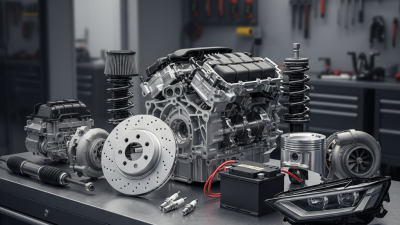
China has become a significant sourcing base for global Audi Auto Part buyers. Its supplier network covers brake components, suspension systems, lighting assemblies, filters, sensors, engine parts, and interior accessories. However, a large factory does not automatically mean dependable quality.
Henry Ford, a pioneer of modern automotive manufacturing, said, “Quality means doing it right when no one is looking.” This principle remains relevant when evaluating Chinese Audi Auto Part suppliers. Reliable buyers should examine IATF 16949 certification, production equipment, material traceability, inspection records, and export experience. They should also confirm whether parts match original equipment specifications, not only whether the packaging looks professional.
Details matter. A serious supplier can provide test reports, dimensional data, batch numbers, and clear warranty terms. It should explain how it controls rubber hardness, metal strength, connector fit, and surface finishing. Sample testing is essential. So is checking the supplier’s response when a problem appears.
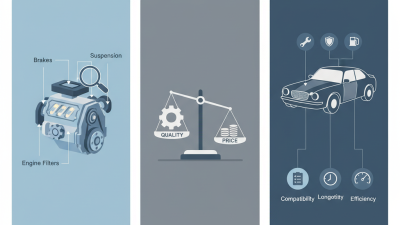
Price still matters. It should not lead the decision.
Some suppliers may offer excellent engineering support but limited warehouse capacity. Others may provide fast delivery but weaker documentation. This is where careful comparison becomes necessary. Buyers should review communication speed, replacement procedures, minimum order quantities, and shipping reliability. These factors are easy to overlook.
No sourcing process is perfect. Even experienced buyers can trust attractive claims too quickly. A better approach combines factory audits, independent testing, trial orders, and continuous performance reviews. This guide introduces leading Chinese suppliers for global Audi Auto Part buyers, focusing on capability, consistency, transparency, and practical purchasing confidence.

China’s premium vehicle parts supply market has a layered structure. It includes original-equipment manufacturers, Tier 1 producers, specialist factories, and aftermarket exporters. Each group serves different purchasing needs, from bulk production to small replacement orders.
Major supply clusters support casting, machining, electronics, rubber components, and interior parts. Many factories provide private-label production and flexible minimum order quantities. Export buyers often compare tooling costs, production capacity, packaging standards, and delivery schedules. A capable supplier should provide material reports, dimensional inspection records, and traceable batch numbers. These documents make quality discussions more practical.
In my experience, factory visits reveal details that websites rarely show. Clean work areas, calibrated measuring tools, and controlled storage usually indicate stronger process discipline. Samples should be checked against drawings, vehicle applications, connector positions, and surface finishes. No supplier is perfect. Even experienced factories may miss a specification after a design change. Clear approval procedures reduce that risk. Buyers should also confirm warranty handling, spare-part availability, export packaging, and communication speed. A low quotation can hide unstable materials or repeated inspection costs. Some suppliers are excellent at metal parts but weak in electronic testing. This difference matters. Small trial orders remain useful, although they cannot replace long-term performance data.
Finding a qualified Chinese supplier for European vehicle parts requires more than a polished website. In practice, I start with product drawings, OE reference numbers, material requirements, and target markets. A reliable supplier answers these details directly. Vague replies signal risk. Ask whether production occurs in-house or through subcontractors. Then request a factory video, business license, quality certificates, and recent inspection records. Documents alone are not proof. I once saw excellent certificates paired with poor sample finishing.
Evaluate technical capability at the sample stage. Check dimensions with calibrated tools, connector fit, surface treatment, casting marks, and packaging protection. For electronic components, request test data for temperature, vibration, moisture, and electrical stability. For suspension or braking parts, ask about metallurgy, hardness, fatigue testing, and batch traceability. A serious supplier should explain test methods, acceptance limits, and corrective actions. Small details matter. The carton should show the part number, batch code, and production date.
Before placing a large order, use a third-party audit or arrange a live video inspection. Compare the audited address with invoices and export documents. Confirm lead times, warranty handling, spare samples, and communication ownership in writing. Request a pilot order with independent inspection before scaling. Payment terms also deserve careful review. No audit is perfect, and my own judgment can be wrong. Recheck critical claims against physical evidence, not sales language. Suppliers that welcome questions are usually easier to manage across borders.
China’s auto parts market includes several supplier categories for global buyers. OE replacement suppliers focus on suspension arms, brake components, cooling parts, and engine sensors. Their strength is dimensional accuracy and stable batch production. Experienced factories usually provide drawings, material reports, and fitment records for different vehicle years.
Aftermarket specialists offer wider choices, including LED lighting, interior trim, grilles, mirrors, and parking sensors. Performance-oriented suppliers may produce upgraded intercoolers, exhaust components, coilovers, and aluminum cooling systems.
Remanufacturing suppliers handle starters, alternators, steering racks, and electronic modules. Product specialization matters because a supplier skilled in body panels may not understand sensor calibration. That difference can create expensive returns.
Tips: Request samples before bulk orders. Check connector shape, mounting holes, surface finish, and package protection. Ask for test data and production photos. Confirm batch traceability and replacement terms in writing. A practical buyer should compare at least three factories, not only prices. I have found that the cheapest quotation often hides weaker coatings or incomplete accessories. Still, even reliable suppliers can make mistakes. Recheck fitment data before shipment. Use independent inspection when order values are high. Clear technical drawings, measurable tolerances, and honest communication are more useful than polished catalog images.
Selecting dependable auto parts suppliers in China requires more than comparing prices. Global buyers should check quality, compatibility, and certification evidence before placing a large order. Request material reports, dimensional inspection records, and production samples. Then compare each sample with the original part’s measurements, connector position, mounting holes, and surface finish. Small differences can cause installation delays.
Certification needs careful review. An ISO 9001 certificate shows a quality management system, but it does not guarantee every component is suitable. For automotive production, an IATF 16949 certificate can indicate stronger process controls. Verify the certificate number, issuing body, validity period, and covered factory address. Ask whether testing follows recognized standards and whether reports belong to the exact part number. A certificate may be valid, yet its scope may be unclear. That deserves attention.
Tips: Build a compatibility checklist for every order. Include vehicle year, engine type, left-hand or right-hand drive, connector design, and operating conditions. Request traceability from raw material to final inspection. Use independent pre-shipment checks when the order is important. Do not rely only on photographs. A sample may pass while later batches change. Keep written approval records, although paperwork alone is not proof. Review supplier performance after delivery, including return rates, packaging damage, and fitment feedback. Mistakes happen. The useful habit is examining why they happened.
Global buyers need more than a low quotation when sourcing auto parts from China. A reliable supplier should confirm the vehicle model, production year, engine code, and exact part number before accepting an order. Request fitment data, material specifications, inspection photos, and a pre-shipment quality report. Samples are worth the extra cost.
Keep communication precise. A small mismatch can delay installation for weeks. Ask for unit prices, minimum order quantities, tooling fees, production time, and packing details in one written quotation. Confirm whether the price includes export packaging and documentation. I have seen buyers focus on price first, then discover unexpected inspection or rework costs.
Shipping terms also require careful review. Confirm the selected Incoterm, loading port, carton dimensions, gross weight, and estimated transit time. Strong packaging should protect painted surfaces, connectors, and fragile clips during long sea transport. Use a freight forwarder familiar with automotive cargo and verify customs requirements with a licensed broker. Delivery estimates can change, so allow a practical buffer.
After-sales support should be agreed before payment. The contract should define warranty coverage, evidence requirements, response times, and replacement procedures. Ask how defective parts will be inspected and whether replacement freight is included. Keep serial numbers, installation records, and unpacking photos. Some suppliers respond quickly before the sale but slowly afterward. This risk deserves attention. No process is perfect, so trial orders and periodic supplier reviews remain sensible.
| Evaluation Category | Key Data Dimension | Typical Industry Practice in China | Considerations for Global Buyers |
|---|---|---|---|
| Product Matching | Required identification information | VIN, OE number, model, year, engine code | Provide the vehicle identification number, original equipment number, product photos, dimensions, and application details before quotation. This reduces the risk of ordering a visually similar but incompatible part. |
| Product Range | Common product categories | Lighting, body parts, suspension, braking, filters, cooling, electrical, and interior components | Confirm whether the supplier manufactures the item, distributes it, or sources it from another factory. Request a product-specific catalogue instead of relying only on broad category coverage. |
| Quality Verification | Pre-shipment inspection | Recommended for every first order | Use dimensional checks, material verification, functional testing, packaging inspection, and sample comparison where appropriate. Independent inspection can be arranged before the balance payment or shipment. |
| Order Quantity | Minimum order quantity | Often negotiable; stock items may be available in low quantities, while customized items usually require a higher MOQ | Ask for separate pricing at sample quantity, trial-order quantity, and regular wholesale quantity. Confirm whether mixed models or mixed part numbers can be combined in one order. |
| Samples | Sample availability and cost | Sample charges and freight are commonly payable by the buyer; refund policies vary by supplier | Obtain written confirmation of the sample price, delivery time, testing method, and whether the sample fee can be credited against a later bulk order. |
| Quotation | Quote validity and price basis | Usually time-limited; prices may depend on quantity, packaging, materials, and exchange rates | Ensure the quotation states currency, unit price, tooling charges, export packaging, taxes, freight, payment terms, and validity period. Avoid comparing offers with different delivery terms. |
| Customization | Private-label or engineering changes | Possible for packaging, labels, specifications, and tooling subject to MOQ and approval | Use approved drawings, technical specifications, color references, tolerance requirements, and written change-control procedures. Clarify ownership and storage of molds or tooling. |
| Production | Typical production lead time | Stock items: several business days; made-to-order items: commonly several weeks | Lead time should begin only after payment, specification approval, and sample approval where required. Request a production schedule for time-sensitive orders. |
| Packaging | Export packaging requirements | Cartons, foam or molded protection, moisture control, palletization, and shipping marks can be arranged | Specify carton strength, individual protection, barcode or label format, pallet requirements, maximum carton weight, and drop-test expectations before production starts. |
| Shipping Method | Transport options | Courier or air freight for samples and urgent orders; sea freight for regular commercial volumes; rail or multimodal transport for selected routes | Select the transport method according to urgency, cargo value, dimensions, destination, and customs requirements. Large body parts may require special handling because of volume rather than weight. |
| Trade Terms | Common Incoterms® 2020 options | EXW, FOB, FCA, CIF, and DAP are frequently discussed | Confirm the named place and responsibility for export clearance, freight, insurance, import clearance, duties, and final delivery. The selected Incoterm should appear on the sales contract and commercial invoice. |
| Shipping Documents | Standard export documentation | Commercial invoice, packing list, transport document, and origin or compliance documents when applicable | Check whether the destination requires a certificate of origin, material declaration, test report, safety document, or other customs information. Document details must match the shipment and purchase order. |
| Customs | Import classification and duties | HS classification, customs value, import VAT or sales tax, and local regulations vary by destination | Use the correct HS code and verify local import rules before ordering. The importer of record is normally responsible for customs accuracy, duties, taxes, and regulatory compliance unless otherwise agreed. |
| Payment | Common commercial payment structures | Deposit plus balance before shipment is common; other arrangements may be available after credit assessment | Define payment milestones, bank-account verification, refund conditions, inspection timing, and the documents required before releasing the balance. Never rely on changed bank details sent only by email. |
| Warranty | Warranty scope and duration | Contract-specific; coverage often depends on installation, usage, and proof of defect | Specify the warranty period, covered failures, exclusions, evidence requirements, replacement or credit process, labor responsibility, and freight allocation for approved claims. |
| Defective Goods | Claim submission requirements | Photos, videos, inspection records, batch details, and installation information are commonly requested | Set a claim notification period and define how hidden defects are handled. Keep packaging, labels, and failed components until the supplier or inspector confirms the disposition. |
| Replacement Policy | Remedy options | Replacement, credit note, refund, or deduction from a future order may be negotiated | State whether replacement parts are shipped with the next order or separately, who pays freight, and how urgent safety-related claims will be escalated. |
| Supplier Assessment | Documents to request before cooperation | Business registration details, production or trading capability, certifications, test reports, references, and export experience | Check that the contracting entity, bank-account holder, invoice issuer, and exporter are consistent. Certifications should be verified for validity, issuing body, scope, and expiration date. |
| Order Control | Recommended purchase-order contents | Part number, description, quantity, specification, price, packaging, delivery term, schedule, and inspection standard | Attach approved drawings, photos, samples, and quality requirements to the purchase order. Written records are essential when specifications change during production. |
| Long-Term Cooperation | Performance indicators | On-time delivery, defect rate, response time, claim closure time, documentation accuracy, and repeat-order consistency | Review supplier performance periodically using measurable targets. A lower unit price should not outweigh recurring quality issues, incomplete documents, or unreliable delivery performance. |
Note: Lead times, minimum order quantities, prices, freight costs, warranty terms, customs requirements, and payment conditions vary by product, destination, order volume, and contract. Confirm all commercial and technical details in writing before placing an order.