China has become a major sourcing base for Audi Auto Part production, but supplier quality varies sharply. Factory size alone proves very little. A reliable manufacturer must demonstrate stable materials, accurate machining, tested electronics, and consistent batch control. This guide examines ten Chinese manufacturers through practical purchasing criteria. These include Audi fitment, OE and aftermarket experience, ISO certification, testing equipment, export history, and warranty support.
Sandy Munro, a respected automotive teardown expert, states, “The best way to learn is to tear things apart.” His practical view matters here. A close inspection can reveal casting flaws, weak connectors, poor sealing, or unverified components. Buyers should request product samples, inspection reports, production photos, and traceability records. They should also confirm whether a part truly matches the specified Audi platform, engine code, and model year.
No ranking is perfect. Supplier capabilities change, and online information can become outdated. A polished website does not guarantee dependable production. Some smaller factories may deliver excellent work, while larger exporters may rely heavily on subcontractors. That possibility deserves attention. The following overview therefore focuses on evidence rather than marketing claims. It considers manufacturing experience, engineering competence, quality systems, communication, customization, and after-sales responsibility. Readers should still conduct independent audits before placing large orders. A sample may pass once, yet fail during repeated use. That is an uncomfortable but important lesson when selecting an Audi Auto Part manufacturer in China.
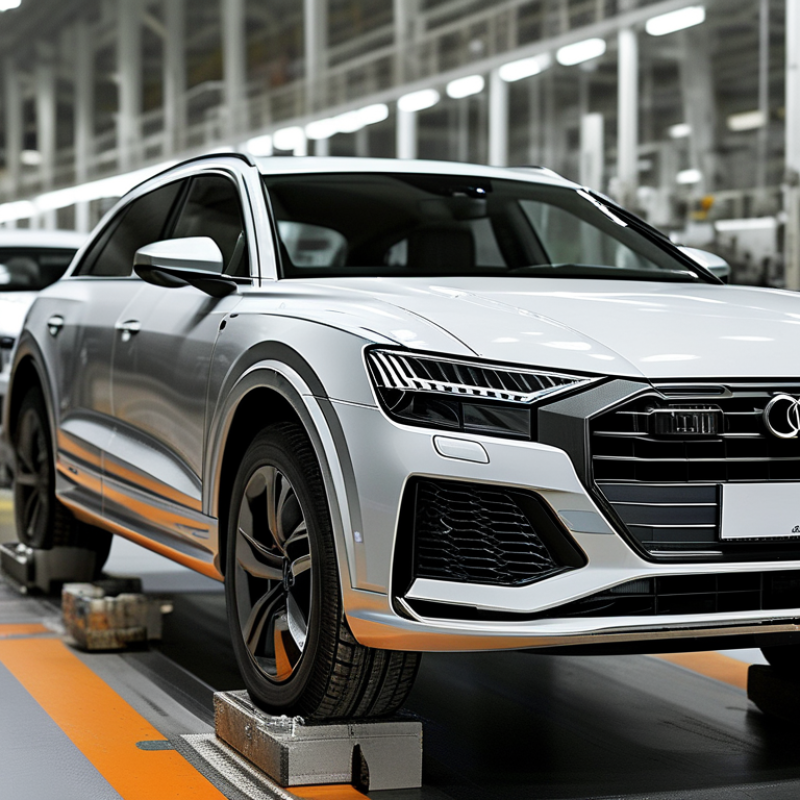
A leading Chinese Audi auto parts manufacturer is defined by more than low pricing or a large catalog. It should understand German vehicle platforms, precise tolerances, and demanding workshop conditions. Experienced engineers study original components, failure patterns, and installation feedback before changing a design. They measure critical surfaces with coordinate machines and test rubber, metal, and electronic parts under heat, vibration, and moisture. Small errors matter. A slightly incorrect connector can create hours of diagnosis.
Reliable manufacturers also control their supply chain. They verify raw materials, record production batches, and inspect every critical dimension. Quality systems such as ISO 9001 or IATF 16949 can support consistency, but certificates alone prove little. Buyers should request test reports, sample results, and traceability records. Clear technical drawings and honest tolerance data build stronger trust than polished marketing. In my experience, the best suppliers explain a weakness instead of hiding it. No factory is perfect.
Tips: Compare samples from several suppliers. Check fitment by model year, engine code, and part number. Ask how warranty claims are investigated, not only how they are accepted. Review packaging quality too; a well-made part can still arrive damaged. Confirm communication speed, engineering support, and replacement procedures before placing a large order. A dependable manufacturer welcomes careful questions and provides evidence without unnecessary promises.
This chart presents a practical 100-point evaluation framework for comparing Audi auto parts manufacturers in China. The weighting emphasizes product quality, OE compatibility, process control, testing capability, supply reliability, and export readiness rather than company or brand names.
China’s Audi auto parts supply chain is built around scale, localization, and fast engineering response. According to the China Association of Automobile Manufacturers, China produced 31.28 million vehicles and sold 31.44 million in 2024. This volume supports dense networks of machining, casting, electronics, and interior-component suppliers.
The strongest manufacturers usually cluster near Shanghai, Jiangsu, Zhejiang, Guangdong, and Hubei. Their factories often combine CNC machining, aluminum die casting, injection molding, and automated inspection. For premium vehicle programs, buyers should check IATF 16949 certification, PPAP records, material traceability, and testing capacity. A polished showroom proves little.
China’s supply chain is also shifting toward sensors, thermal systems, battery components, and software-linked electronics. Deloitte’s 2024 China automotive industry research highlights continued investment in intelligent and electrified vehicle technologies. Meanwhile, customs data shows China remains a major exporter of automotive components, serving both replacement and original-equipment markets.
The difficult part is consistency. A supplier may pass an initial sample review but struggle during monthly production. That risk is often underestimated. Practical audits should inspect calibration labels, incoming-material controls, process capability charts, and packaging protection. Shorter domestic logistics can reduce lead times, yet imported chips and specialized coatings may still create delays. Supplier selection needs evidence, not attractive claims.
China’s top ten automotive parts manufacturers are often best compared by product category, not by factory size. Many specialize in one area and build strong technical experience there. Their product ranges commonly include brake systems, suspension components, steering parts, cooling modules, and engine sensors. Some also produce lighting assemblies, exhaust components, body panels, interior switches, and electronic control units.
Reliable suppliers usually provide material certificates, dimensional reports, durability records, and traceable batch numbers. A braking manufacturer may test calipers through repeated heat cycles, while a suspension producer checks bushings for noise and fatigue. Cooling-system factories often inspect radiator pressure, weld quality, and leakage resistance. Electrical-part manufacturers should show connector testing, circuit protection data, and software compatibility records. Small details matter.
Factory visits can reveal more than polished catalogs. Look for calibrated measuring tools, controlled storage, and clear inspection stations. Ask about tooling ownership and replacement-part consistency. Some suppliers offer excellent samples but weaker mass production. That gap deserves attention. Packaging may also appear ordinary, yet moisture protection and molded supports can prevent costly damage. Certifications help, but they do not replace independent testing. A careful buyer should compare samples, audit production, and confirm fitment with vehicle-specific data. Mistakes still happen, especially with electronic modules and revised model years. A thoughtful sourcing process leaves room for verification.
Selecting reliable Chinese manufacturers for premium European vehicle parts requires more than comparing prices. Quality begins with controlled materials, accurate machining, and stable production records. A factory should provide traceable batch numbers, inspection reports, and clear warranty procedures. Small details matter, such as clean connector pins, even surface coatings, and seals that remain flexible after heat exposure.
Certification adds another layer of confidence. ISO 9001 supports consistent quality management, while IATF 16949 shows stronger automotive process control. Relevant UNECE requirements may also apply to lighting, braking, steering, and other safety-related components. However, a certificate alone can mislead. Buyers should verify its scope, validity, and issuing organization. Audit photos are useful, but independent testing is more convincing. Real evidence matters.
Compatibility must be checked before shipment. Suppliers should match the part number, vehicle year, engine code, connector shape, mounting points, and software requirements. A part can look identical and still fail after installation. Dimensional reports and sample fitting reduce this risk. I once considered visual similarity a strong sign, but that assumption was too simple. Minor tolerance differences can create vibration, warning lights, or premature wear. Ask for test samples, installation instructions, and return terms. Keep records of every specification. That habit prevents expensive confusion later.
Selecting a Chinese supplier for premium European vehicle parts requires more than a polished catalog. China Association of Automobile Manufacturers reported 31.44 million vehicle sales in 2024, showing the market’s manufacturing scale. Scale alone proves little.
Ask for IATF 16949 certification, recent audit results, and part-level traceability. Check whether each batch links to raw materials, tooling, operators, and inspection records. A reliable supplier should provide dimensional reports, material certificates, and PPAP documents before production. Request samples from normal production, not specially prepared pieces. Measure connector fit, surface finish, hardness, and sealing performance yourself.
S&P Global Mobility’s 2024 aftermarket analysis highlights the growing importance of vehicle age, electronic content, and replacement demand. Therefore, evaluate engineering support, not only unit price. Can the supplier read technical drawings accurately? Can it manage engineering changes without confusing old and new revisions? Ask for a live video audit of the warehouse and calibration room. Look for labeled bins, controlled humidity, and visible gauge records.
Price can mislead. Very low quotations may hide weaker polymers, recycled packaging, or unstable tooling. I have seen documents look complete while sampling remained inconsistent. That is an uncomfortable warning. Use a staged order, independent inspection, and clear acceptance limits. Review warranty response time, export experience, and corrective-action reports. A supplier that admits one failed test may be more dependable than one claiming perfection.
| No. | Evaluation Dimension | Recommended Benchmark | Evidence to Verify | Weight | Risk Level |
|---|---|---|---|---|---|
| 1 | Quality Management System | A documented quality system with ISO 9001; IATF 16949 is preferred for automotive production and process control. | Valid certificates, certification scope, latest surveillance-audit record, nonconformity history, and corrective-action records. | 15% | High |
| 2 | Technical Compatibility | Complete vehicle-application data, including model year, engine type, transmission, body style, and applicable OE reference numbers. | Technical catalogue, engineering drawings, dimensional reports, VIN/application coverage, and sample fitment results. | 15% | High |
| 3 | Material and Component Control | Traceable raw materials and controlled components, with specifications appropriate to the part category and operating environment. | Material certificates, incoming-inspection records, approved-vendor lists, batch identification, and supplier traceability procedures. | 10% | High |
| 4 | Testing and Validation | Product-specific validation covering dimensions, performance, durability, temperature, vibration, corrosion, and electrical safety where applicable. | Internal test plans, laboratory capability, third-party reports, calibration records, and product validation summaries. | 12% | High |
| 5 | Production Capacity | Capacity should cover forecast demand with documented production planning and reasonable reserve capacity for peak orders. | Monthly capacity by product line, equipment list, production schedule, utilization rate, and capacity-expansion plan. | 10% | Medium |
| 6 | Defect Rate and Process Control | The supplier should use incoming inspection, in-process inspection, final inspection, SPC, PFMEA, control plans, and documented root-cause analysis. | Recent PPM data, first-pass yield, customer-complaint records, 8D reports, control plans, and process-audit results. | 12% | High |
| 7 | Certifications and Compliance | Compliance must match the destination market and part category; examples include applicable UNECE requirements, RoHS, REACH, and electromagnetic regulations. | Test reports, declarations of conformity, restricted-substance statements, product labels, and certificate verification links. | 10% | High |
| 8 | Minimum Order Quantity and Pricing | Commercial terms should clearly separate tooling, sampling, packaging, testing, logistics, taxes, and warranty costs rather than relying only on unit price. | Itemized quotation, MOQ, tooling ownership terms, payment terms, price-validity period, and annual price-adjustment rules. | 8% | Medium |
| 9 | Lead Time and Supply Reliability | Standard production lead time is commonly evaluated within approximately 15–45 days after order confirmation, depending on tooling, customization, and volume. | Historical on-time-delivery rate, production calendar, safety-stock policy, logistics options, and business-continuity plan. | 5% | Medium |
| 10 | Warranty and After-Sales Support | A clearly defined warranty is commonly set at 12–24 months, subject to installation, usage, storage, and claim-documentation conditions. | Written warranty policy, claim-response time, replacement procedure, technical-support channels, and return-material authorization process. | 3% | Medium |
| Total Evaluation Weight | 100% | — | |||