How to Choose the Best Car Bodykit for Your Vehicle?
Choosing the right Car Bodykit can transform your vehicle’s appearance and performance. Renowned automotive designer Jake Thompson once said, “A perfect bodykit can enhance not just the looks, but the driving experience.” This statement highlights the importance of making an informed decision.
When selecting a Car Bodykit, consider your vehicle's style and purpose. Each kit varies in design and functions, catering to different aesthetics and performance goals. A well-fitted bodykit can improve aerodynamics while creating a unique look, yet poor choices may lead to issues with fitting and functionality. Pay attention to material quality as well, as it impacts durability.
Take the time to research reputable brands and read reviews. Not every bodykit will suit your needs. Sometimes, enthusiasts rush decisions, only to regret the choice later. An effective kit should not only enhance style but also maintain comfort and safety. Reflect on your needs before diving in.

Understanding Car Bodykits: Definition and Types
Car bodykits play a crucial role in how a vehicle looks and performs. They consist of various components designed to enhance aesthetics and aerodynamics. These kits can include bumpers, side skirts, spoilers, and fenders. Each piece works together to create a cohesive look. Drivers may choose bodykits to give their vehicles a more aggressive stance or a sporty appearance.
There are different types of bodykits available. Some are made for performance, improving airflow and reducing drag. Others focus on style, providing a unique visual impact. However, it’s important to note that not all kits fit every vehicle perfectly. Misalignment or poor installation can lead to an unappealing look. Drivers should consider the purpose of the kit. Would it enhance the vehicle's function or simply its form?
Selecting the right bodykit can be overwhelming. Factors like material, design, and compatibility with the vehicle are essential. Many products claim to be universal, yet they often fall short in quality or fit. Research is key, but it's also okay to seek advice from trusted sources. Sometimes, what looks great online does not always match the real thing. The best kit aligns with personal style while considering practicality.
Assessing Compatibility: Matching Bodykits with Your Vehicle’s Model
Choosing the right car bodykit can enhance both the aesthetics and performance of your vehicle. However, compatibility is crucial. An incompatible bodykit may lead to issues, such as improper fitting or decreased functionality. According to industry reports, nearly 30% of car enthusiasts face dissatisfaction due to mismatched bodykits. This statistic highlights the importance of thorough research and assessment.
When selecting a bodykit, begin by understanding your vehicle model. Details such as dimensions and design styles matter significantly. For instance, a sportier look might not complement an SUV’s original design. Consulting online forums can provide insights from others who have faced this dilemma. Visualizing how the bodykit will look on your vehicle is essential.
Not every fit is perfect. Some users report that minor adjustments are necessary after installation, often leading to further costs. A detailed measurement before making a purchase is helpful. If a bodykit requires extensive modifications, it might not be worth the investment. In a recent survey, over 40% of participants cited fitment issues as a common complaint after installation. Reflecting on these experiences can guide your choice and prevent future regrets.
How to Choose the Best Car Bodykit for Your Vehicle?
Material Considerations: Pros and Cons of Different Bodykit Materials
When selecting a bodykit for your vehicle, material choice is crucial. Common options include fiberglass, polyurethane, and carbon fiber. Each material has its strengths and weaknesses. For instance, fiberglass is lightweight and affordable. However, it can crack easily under stress. On the other hand, polyurethane is more durable and flexible but tends to cost more.
According to industry reports, carbon fiber is the lightest and strongest option. It resists impacts but can be pricey. While many enthusiasts opt for carbon fiber, others may find fiberglass a better fit for budget projects. Understanding these options will help you make informed decisions.
Tip: Assess your driving style. If you drive aggressively, consider stronger materials like polyurethane or carbon fiber.
Another factor is installation. Some materials are easier to work with than others. Fiberglass may require extensive preparation for a perfect fit. In contrast, polyurethane often comes pre-fitted, saving time. Reflect on your DIY skills before committing.
Tip: Research installation methods. Knowing what’s involved can shape your material choice. This way, you’ll avoid potential headaches down the road.
Design Aesthetics: Choosing a Style that Fits Your Personal Taste
Choosing the right car body kit is about more than just function; it's also about style. Design aesthetics play a crucial role in reflecting your personality. A body kit can transform your vehicle, giving it a unique character. When considering styles, think about what truly resonates with you. Are you drawn to sleek lines or aggressive edges?
Consider the overall theme of your car. A sporty look might call for a kit with more pronounced features. Meanwhile, a classic style may benefit from subtle enhancements. Pay attention to colors and textures as well. A matte finish can offer a modern edge, while glossy surfaces often capture a vintage vibe.
Finding harmony between your vision and the car’s design is essential. Be open to experimenting. You might think a certain kit will work, only to find it clashes with other elements. Trust your instincts but remain flexible. Sometimes, the choice may lead to surprises, good or bad. Think about how each piece complements your overall aesthetic.
Installation and Maintenance: Ensuring Proper Fit and Upkeep of Bodykits
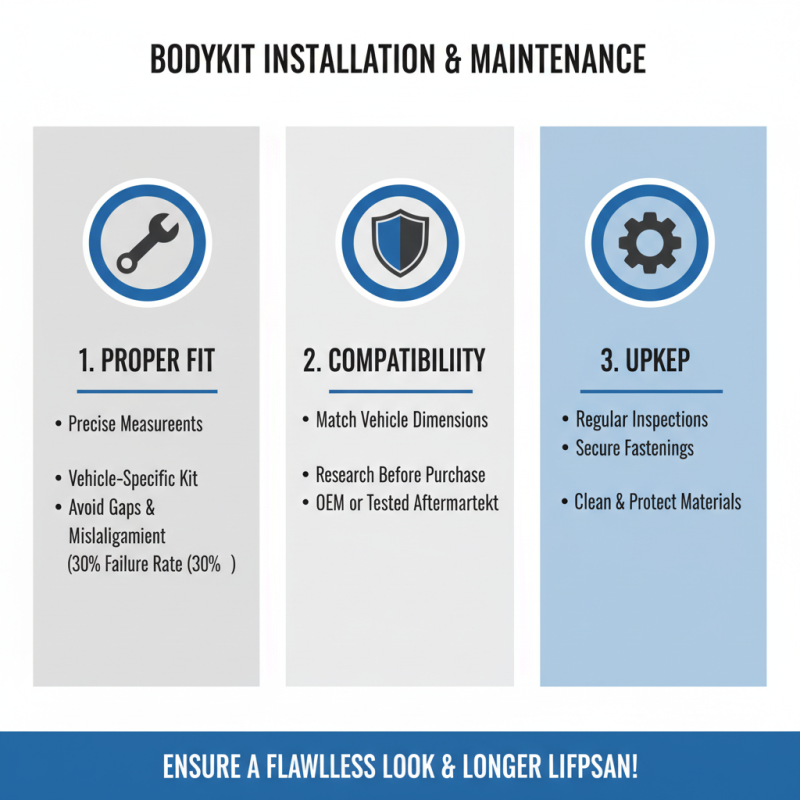
When it comes to installing a car bodykit, proper fit and maintenance are crucial. Many enthusiasts overlook the importance of precise measurements. Reports indicate that nearly 30% of bodykit installations have issues with alignment or gaps. This can result from using generic kits not designed for specific vehicle models. To avoid unnecessary headaches, ensure that the bodykit is compatible with your vehicle’s dimensions before purchasing.
Once the bodykit is installed, regular upkeep is essential. Frequent cleaning and inspection can prevent issues related to wear and tear. Studies show that about 40% of bodykit owners neglect basic maintenance. Simple steps like washing and applying protective coatings can extend the lifespan of the kit. Pay attention to potential rust spots or paint fading. Early detection prevents costly repairs down the line. Keep in mind that even minor imperfections can affect the overall appearance and performance of your vehicle.
In the end, balancing aesthetics and functionality is key. A poorly maintained bodykit can diminish your car's value. Finding the best fit is just the beginning; ongoing care is what truly brings the investment to life. Reflect on how often you check your bodykit's condition. It’s easy to forget, but it matters more than you think.